

Could a Brain Implant Restore a Voice?
Brain-computer interfaces are beginning to turn neural activity into speech.
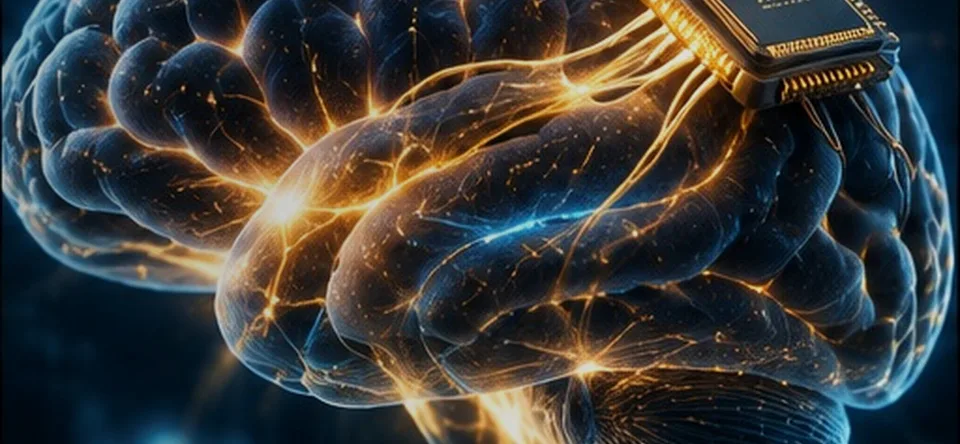
For people who have lost the ability to speak, a brain-computer interface can offer something extraordinary: a new channel for communication. Researchers have demonstrated systems that decode neural signals associated with attempted speech and translate them into words or synthetic speech. In 2025, an NIH-highlighted study reported a system capable of decoding a large vocabulary at conversationally useful speeds under research conditions. These are carefully controlled experiments, not consumer gadgets. The long-term possibilities include more independence for people with severe paralysis. But surgery, reliability, privacy and access remain serious challenges. Reading brain signals to help someone communicate is not the same as reading every private thought.
The question
Should neural interfaces be used only for treatment - or also for enhancement?
Source: U.S. National Institutes of Health, brain-computer interface research (2025)
Illustration: original concept art, not a documentary photograph.
Comments (0)
Log in to comment