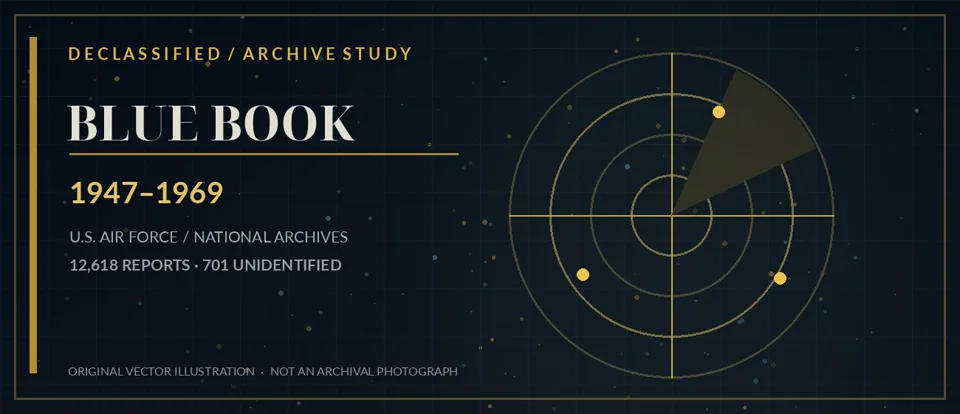
Project Blue Book: 701 Unidentified Cases
The U.S. Air Force investigated thousands of UFO reports - and did not identify them all.
14
0
The U.S. Air Force investigated thousands of UFO reports - and did not identify them all.
U.S. authorities recruited German scientists, including people with troubling wartime histories.
A classified internal study became a milestone in public access to government records.
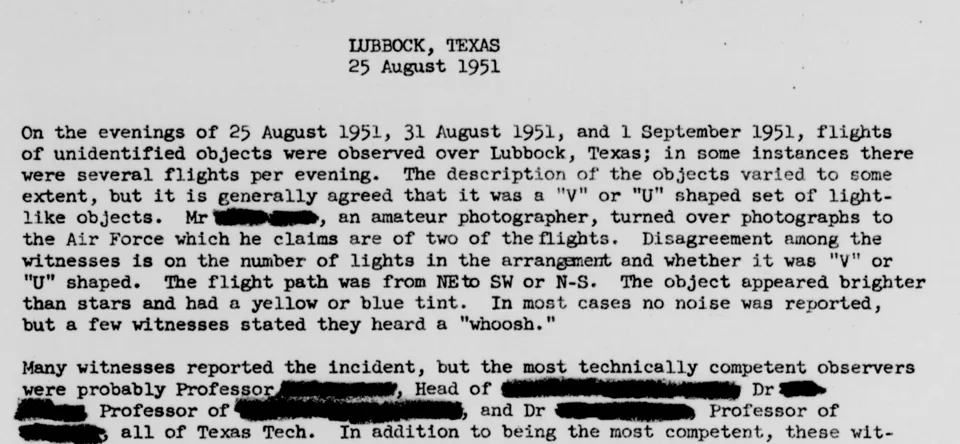
In August 1951 four college professors in Lubbock, Texas, watched formations of lights cross the night sky, and a student photographed something similar days later. The Project Blue Book file holds the investigators' status report, the laboratory test of the negatives and the Air Force's final answer: probably migrating birds lit by street lights.
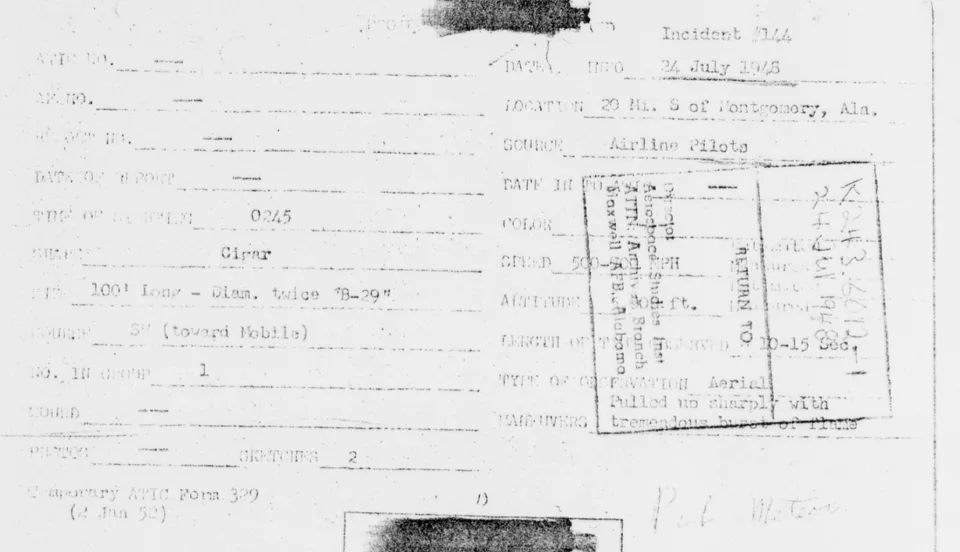
Before dawn on 24 July 1948 two Eastern Air Lines pilots saw a wingless, flaming object pass their DC-3. The US Air Force file keeps their statements and sketches, an intelligence report that left it unidentified, and the astronomer’s note that pointed to a meteor.
A Japanese cargo 747 crew reported unidentified traffic beside them for over half an hour above Alaska. The Federal Aviation Administration investigated as air-traffic controller, not as UFO investigator, and released its whole file in March 1987. The papers, now at the US National Archives, show what the crew reported, what the radar showed and why the FAA closed the case.
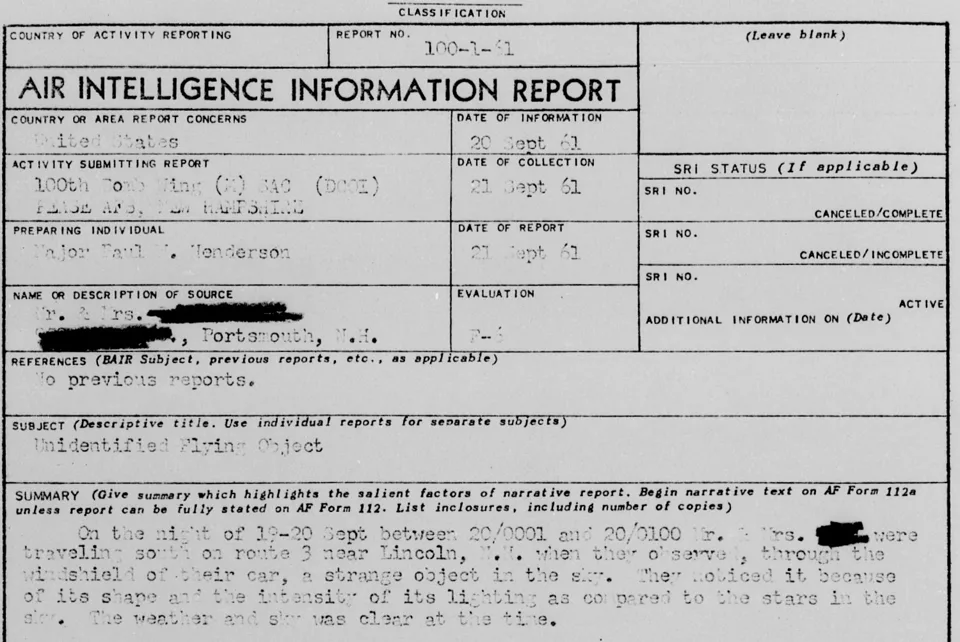
After a night drive through the White Mountains in September 1961, a New Hampshire couple reported a strange lighted object to Pease Air Force Base. The Air Force file holds a three-page intelligence report taken by telephone, a record card and a 1963 letter. It ends with “insufficient data” and, probably, Jupiter.
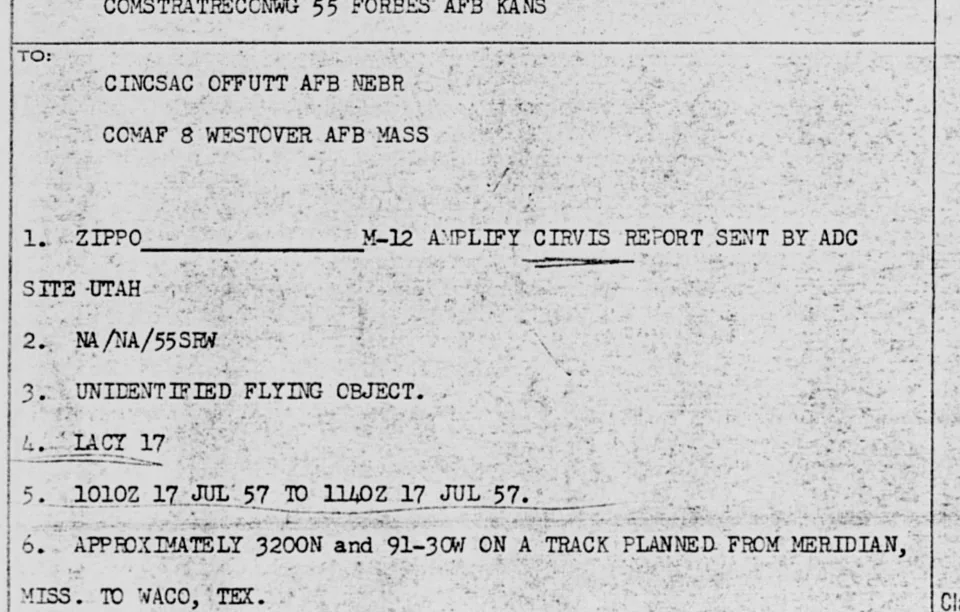
On 17 July 1957 the crew of an Air Force RB-47H reconnaissance jet reported a light and a radar-like signal that seemed to follow them from Mississippi to Oklahoma. The Air Force file says “unknown”, then “aircraft”; the Condon study, ten years later, could not find the file at all.
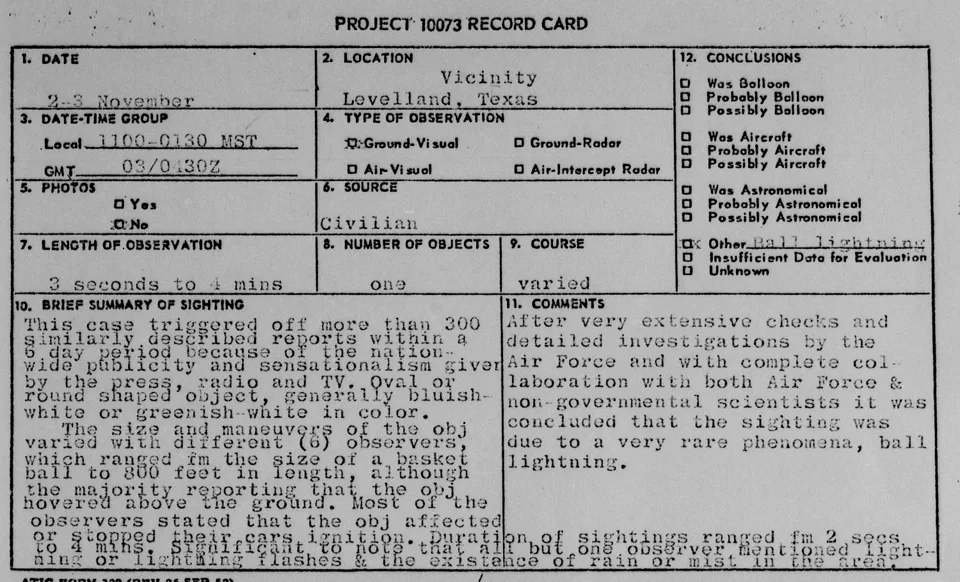
On the night of 2–3 November 1957 several drivers near Levelland, Texas, said a glowing object made their engines and lights fail. The Air Force file shows two verdicts: the field investigators sent the case on as “unresolved”; the Blue Book office closed it as ball lightning.
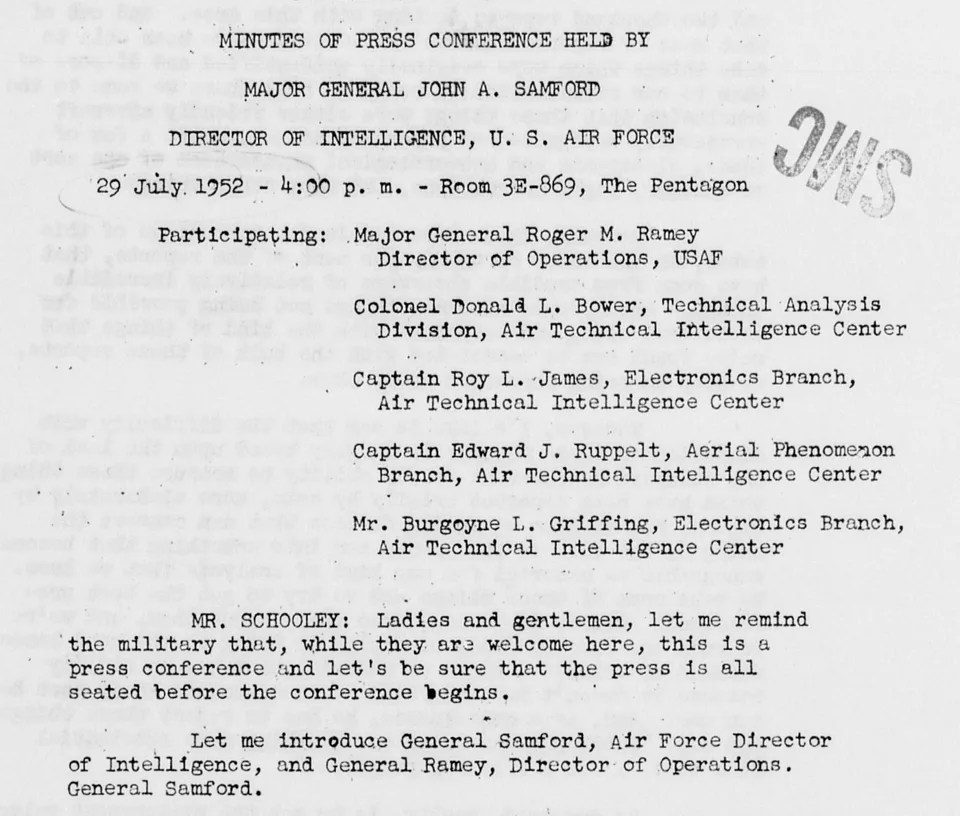
On two July nights in 1952, unidentified targets filled the radar scopes at Washington National Airport and Andrews Air Force Base, and jet interceptors were sent up. The Air Force's own files hold the officers' report, the analysts' verdict and the minutes of the press conference that followed. They are more cautious than the legend.
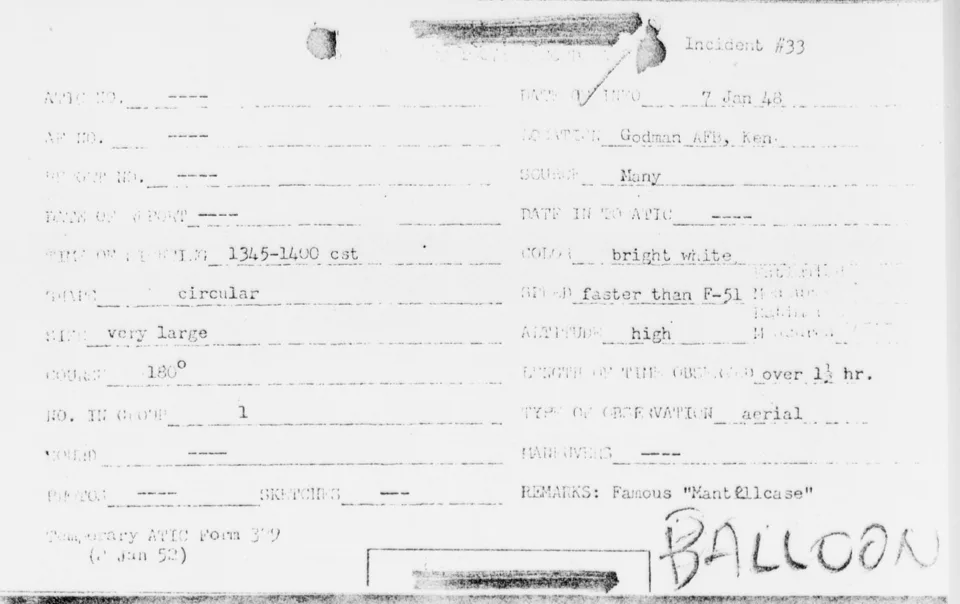
On 7 January 1948 a National Guard pilot chasing a bright object over Kentucky crashed and was killed. The US Air Force case file records what the control tower heard, why the first explanation was dropped, and the single word later written on the record card.
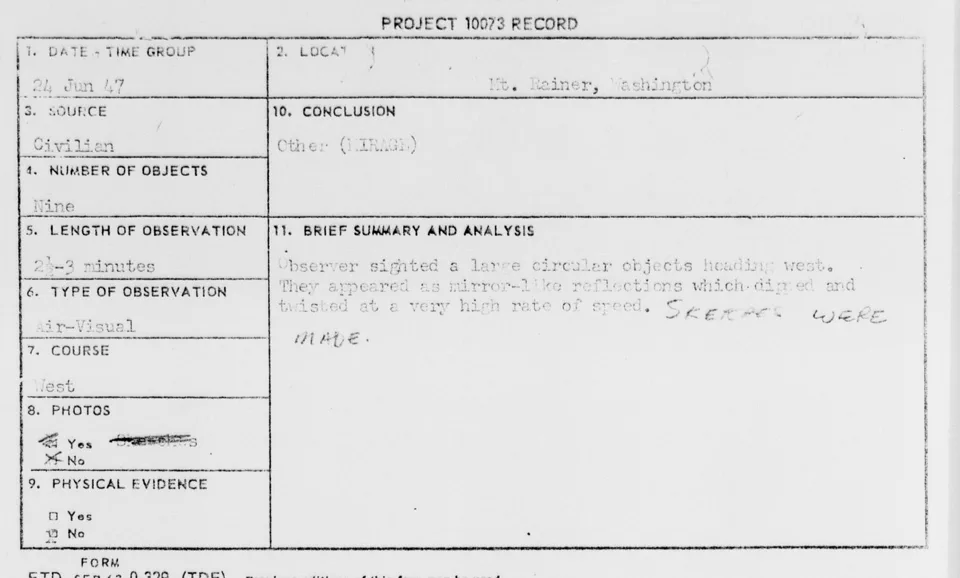
On 24 June 1947 a private pilot reported nine bright objects racing past Mount Rainier. The US Air Force file on his sighting, now at the US National Archives, keeps his typed statement, his sketch, and three different official verdicts.
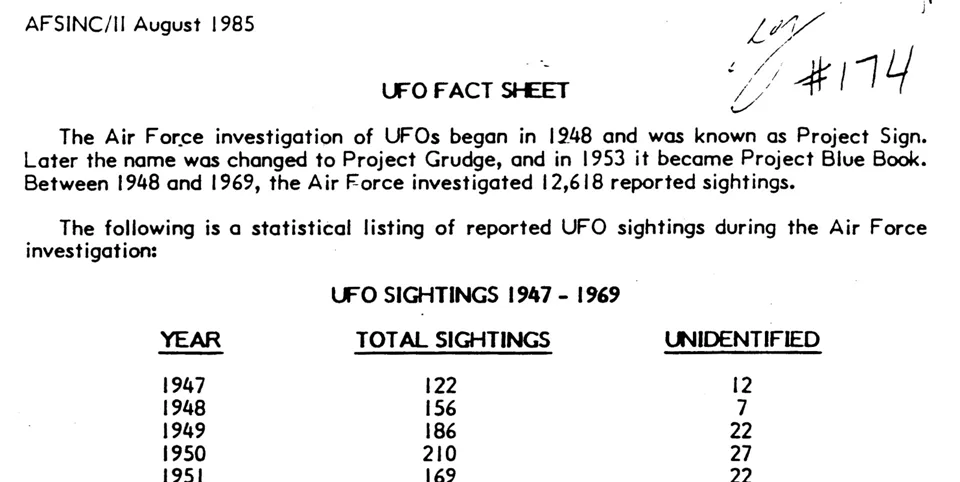
For twenty-two years the US Air Force collected and investigated UFO reports. When it closed the project in December 1969 it left three conclusions and a number that is still quoted today. The official fact sheet, the year-by-year table and a Pentagon film from 1952.
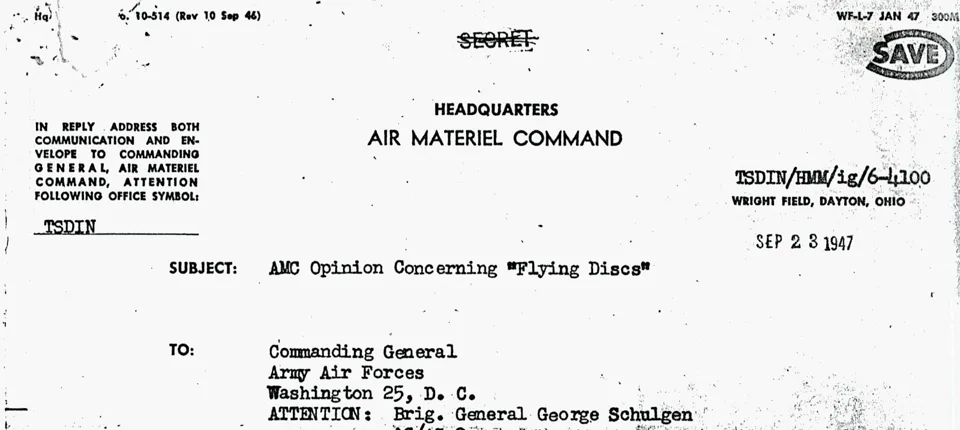
Three months after the first “flying saucer” wave, the head of the US Air Materiel Command put his command's opinion in writing. The three-page SECRET letter is now public at the US National Archives. Here is what it says, and what it does not.