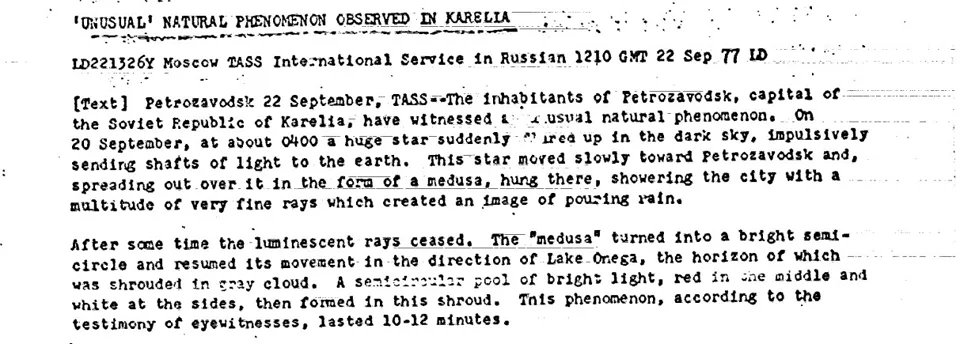
Before dawn on 20 September 1977, people in Petrozavodsk, in Soviet Karelia, saw a bright light spread over their city. Two days later the Soviet news agency TASS reported it as an “unusual natural phenomenon”. The CIA kept the English translation; it is now in the agency’s UFO collection.
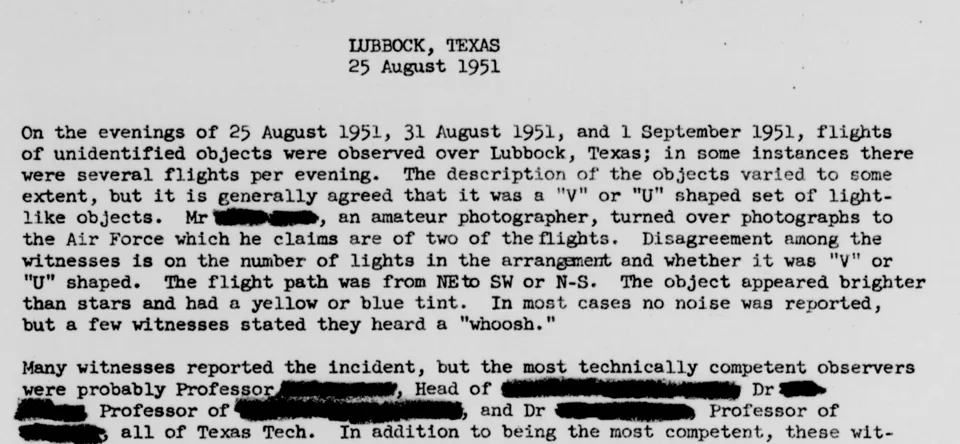
In August 1951 four college professors in Lubbock, Texas, watched formations of lights cross the night sky, and a student photographed something similar days later. The Project Blue Book file holds the investigators' status report, the laboratory test of the negatives and the Air Force's final answer: probably migrating birds lit by street lights.
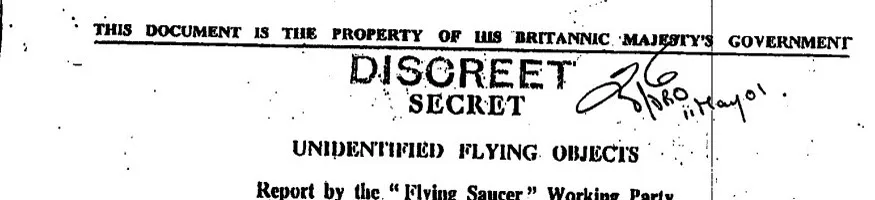
In 1951 a small team of British defence intelligence officers wrote a secret report on flying saucers. It reviewed American studies, questioned RAF and test pilots, and recommended that the subject be dropped. A year later Winston Churchill asked what it all amounted to. Here is what the report actually says.
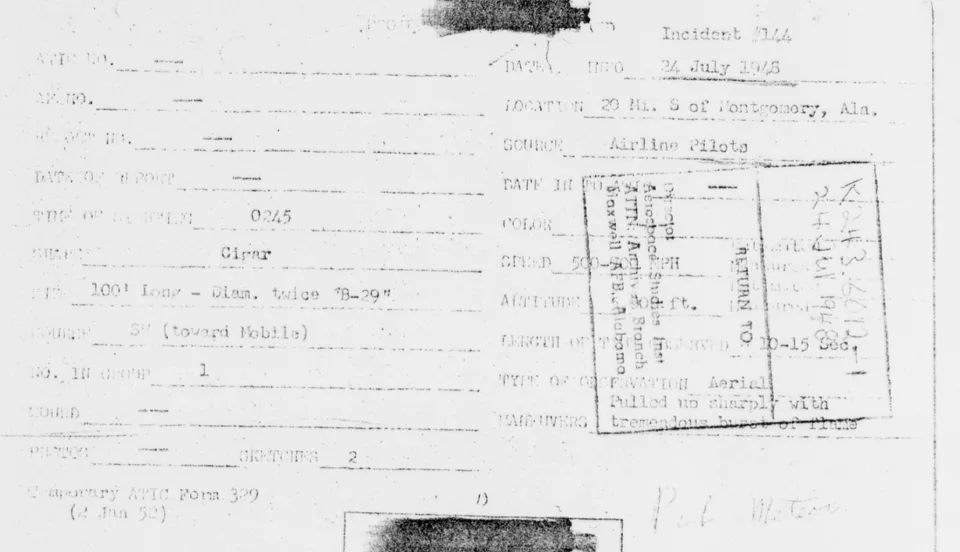
Before dawn on 24 July 1948 two Eastern Air Lines pilots saw a wingless, flaming object pass their DC-3. The US Air Force file keeps their statements and sketches, an intelligence report that left it unidentified, and the astronomer’s note that pointed to a meteor.
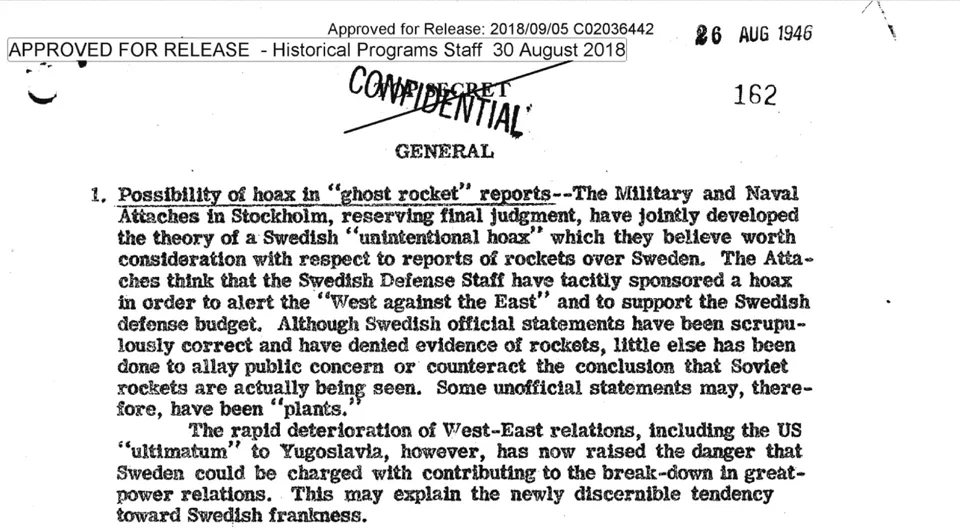
In the summer of 1946, people across Sweden reported fast objects streaking through the sky. Washington took the reports seriously enough to consider sending a scientist to Stockholm. Three US intelligence papers released by the CIA show what American officials knew, suspected and decided.
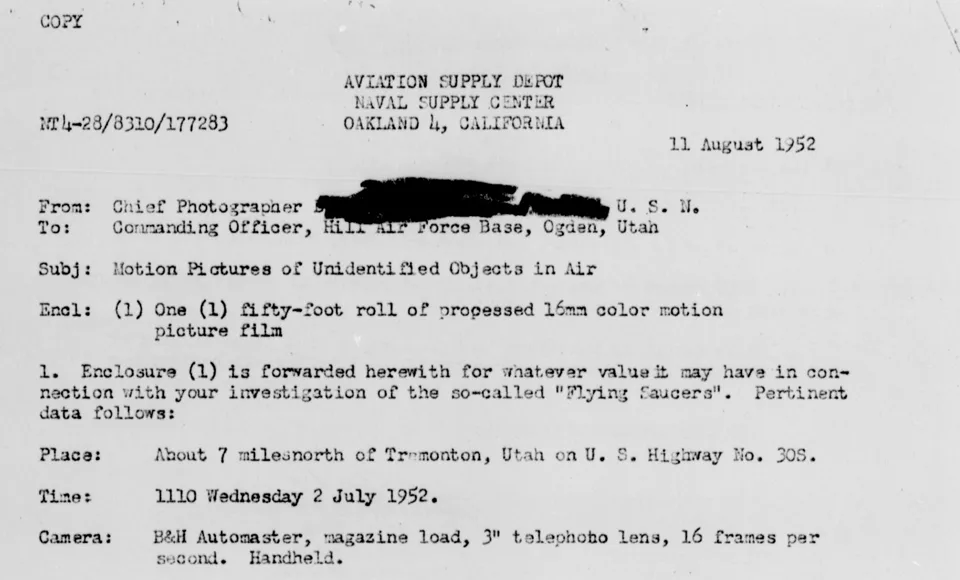
Two short colour films of bright dots in a daytime sky became the best-known “UFO movies” of the 1950s. The Air Force files and a CIA report show what the analysts actually concluded: a US Navy laboratory called the Utah objects light sources that were not birds, balloons or aircraft; a CIA-convened panel refused to accept that; the Air Force settled on aircraft reflections and seagulls.
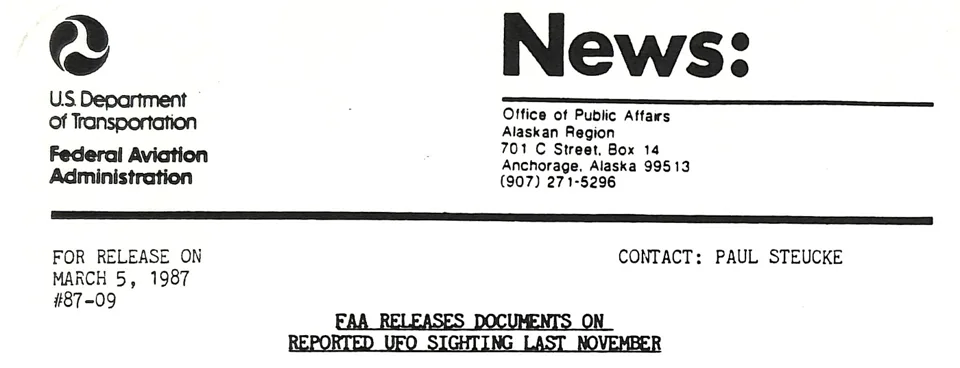
A Japanese cargo 747 crew reported unidentified traffic beside them for over half an hour above Alaska. The Federal Aviation Administration investigated as air-traffic controller, not as UFO investigator, and released its whole file in March 1987. The papers, now at the US National Archives, show what the crew reported, what the radar showed and why the FAA closed the case.
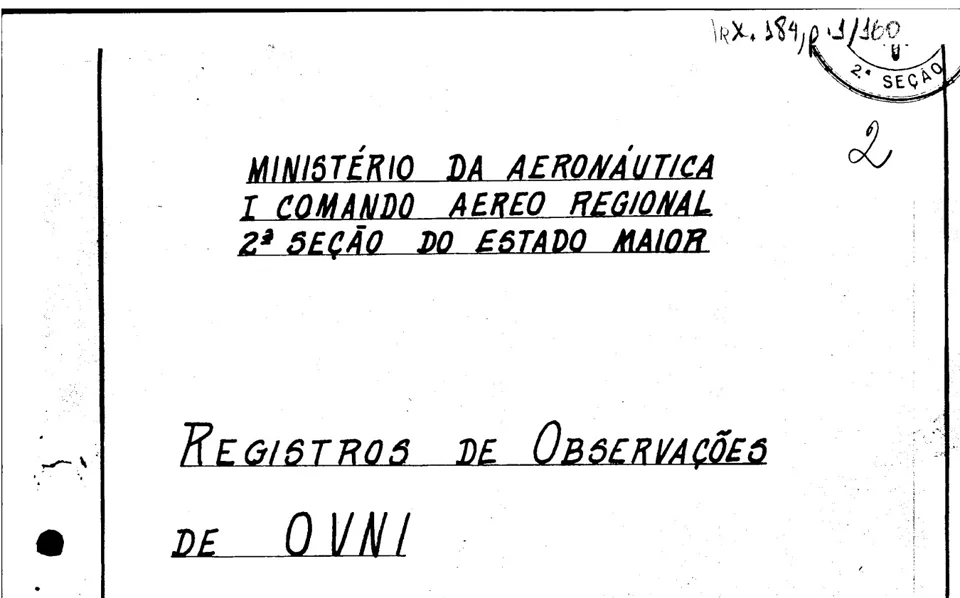
In 1977–78 people on the coast of Pará, in the Amazon, reported lights in the sky, and a Brazilian Air Force team went to look. Its file of 130 numbered sighting records, with a map, sketches and photographs, is now open at Brazil's National Archives. It records, carefully, what people saw — and draws no conclusion.
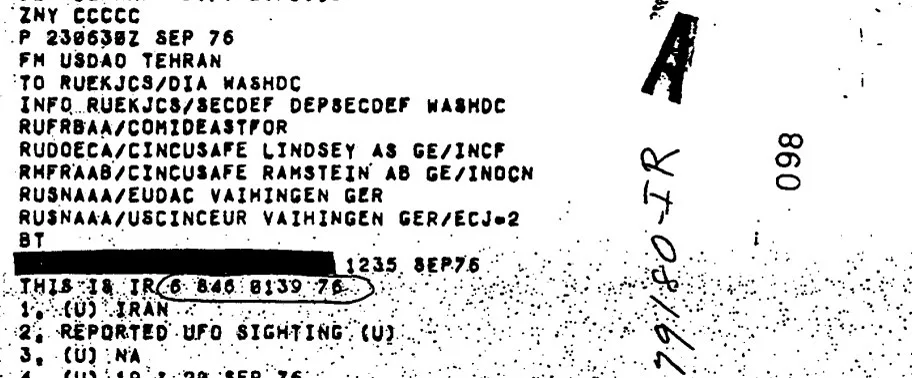
In the early hours of 19 September 1976 the Imperial Iranian Air Force sent two F-4 Phantoms after a bright light north of Tehran. Four days later the US defence attaché cabled an account to Washington, and the Defense Intelligence Agency graded it. The National Security Agency later released the cable, the grading form and a US Air Force retelling. Here is what they say.
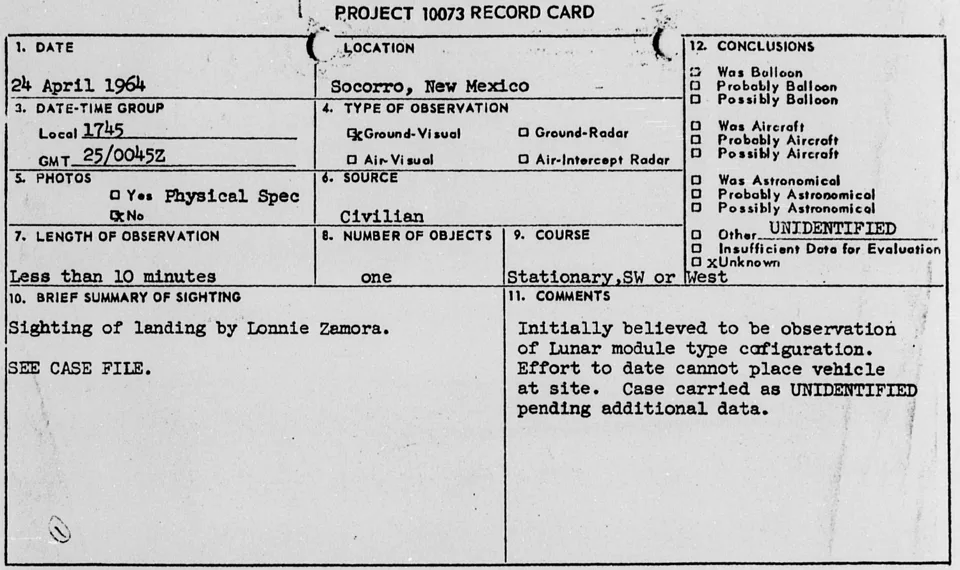
On 24 April 1964 a Socorro police officer, Lonnie Zamora, reported an egg-shaped object rising from a gully on a roar of flame. Project Blue Book checked balloons, aircraft, soil and radiation, and carried the case as “unidentified”. Its chief later called it, in a CIA journal, “the best-documented case on record”.
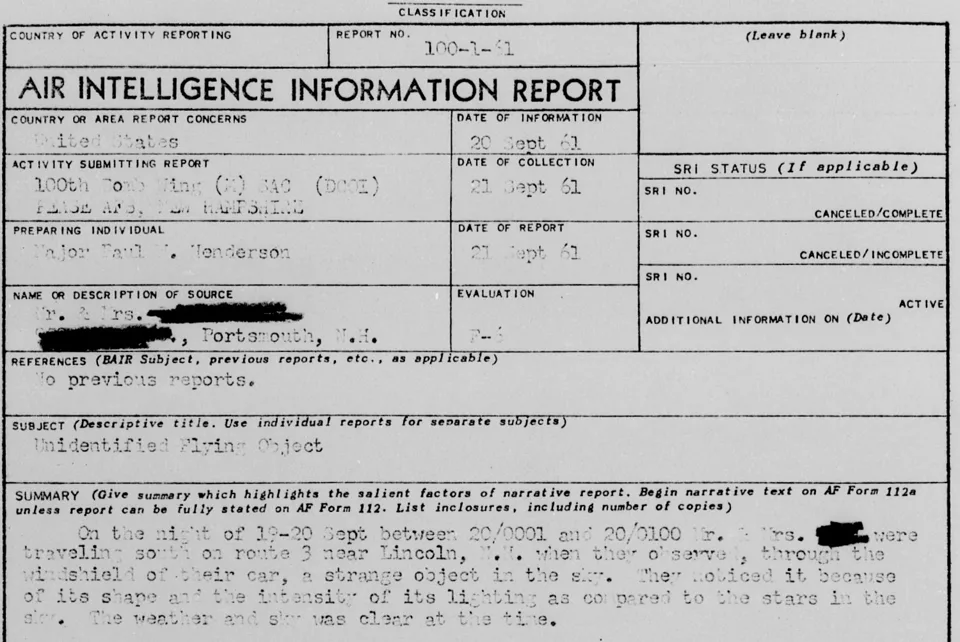
After a night drive through the White Mountains in September 1961, a New Hampshire couple reported a strange lighted object to Pease Air Force Base. The Air Force file holds a three-page intelligence report taken by telephone, a record card and a 1963 letter. It ends with “insufficient data” and, probably, Jupiter.
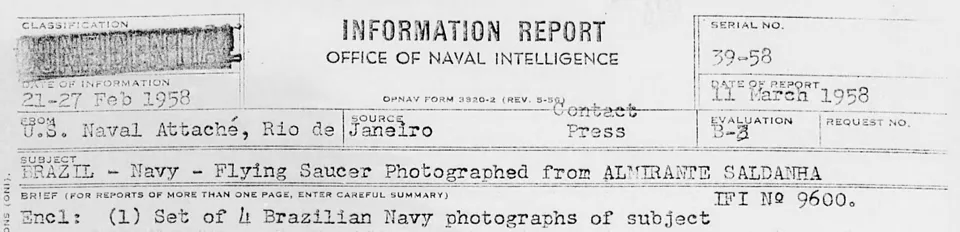
In January 1958 a civilian photographer aboard a Brazilian Navy ship off Trindade Island took pictures of a disc in the sky. The photos made headlines in Rio. The US Naval Attaché reported the affair to Washington, and Project Blue Book filed it. The declassified US file shows how the case was judged — and how little was actually checked.
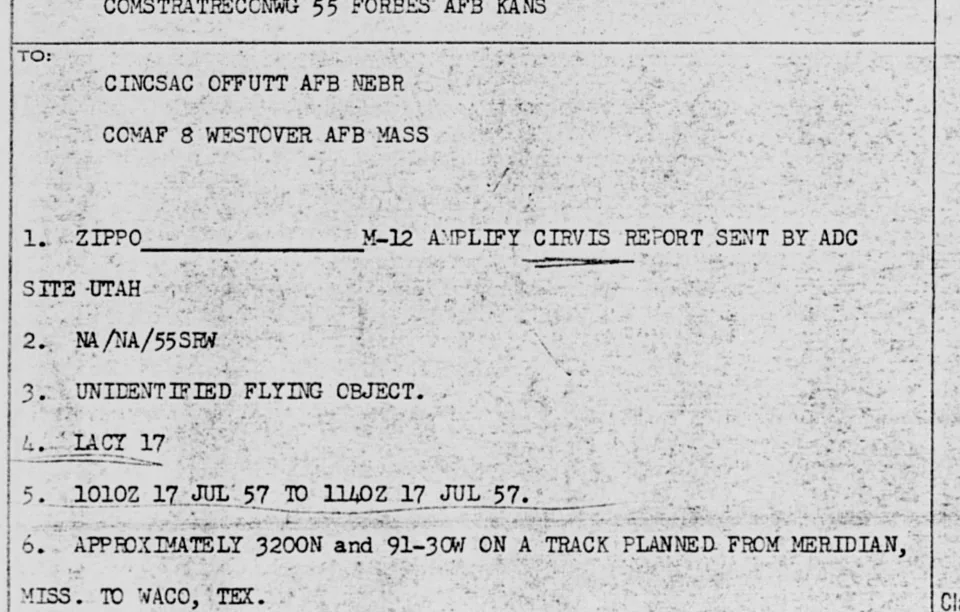
On 17 July 1957 the crew of an Air Force RB-47H reconnaissance jet reported a light and a radar-like signal that seemed to follow them from Mississippi to Oklahoma. The Air Force file says “unknown”, then “aircraft”; the Condon study, ten years later, could not find the file at all.
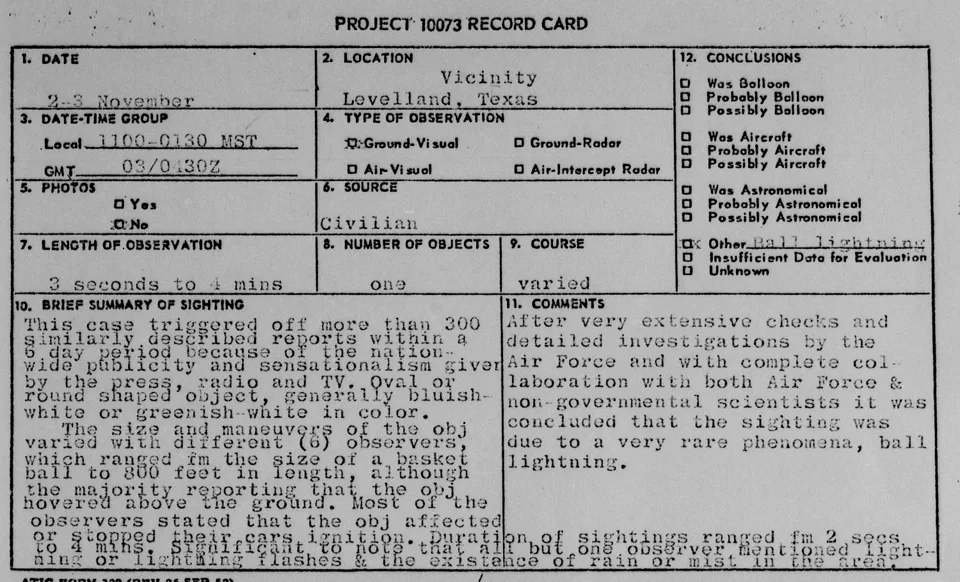
On the night of 2–3 November 1957 several drivers near Levelland, Texas, said a glowing object made their engines and lights fail. The Air Force file shows two verdicts: the field investigators sent the case on as “unresolved”; the Blue Book office closed it as ball lightning.
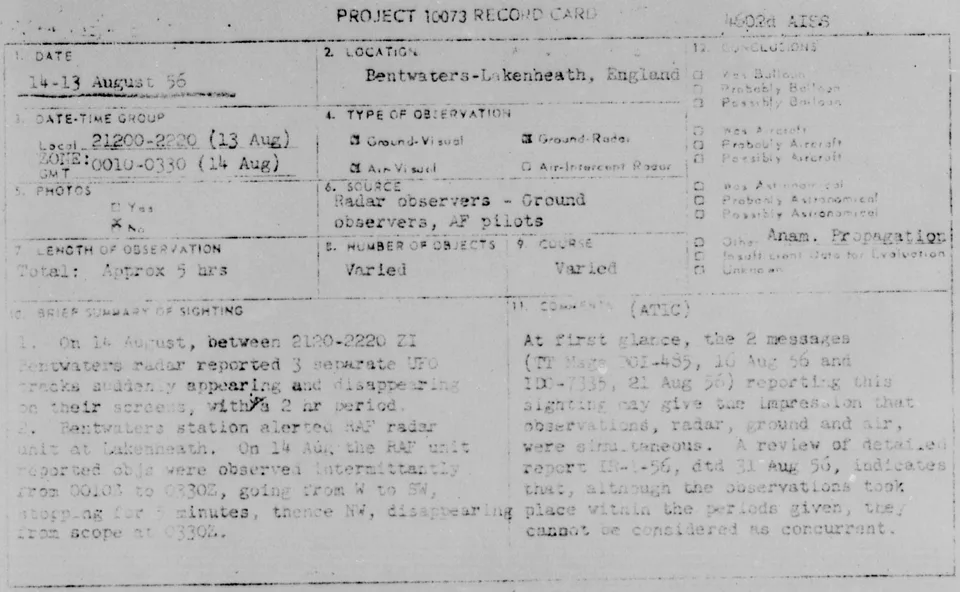
On the night of 13–14 August 1956, US Air Force radar operators at two English bases tracked targets they could not explain, and pilots were sent to look. Blue Book closed the case as anomalous radar propagation; its own consultant disagreed, and twelve years later the Condon study called it the most puzzling case in its radar-visual files.
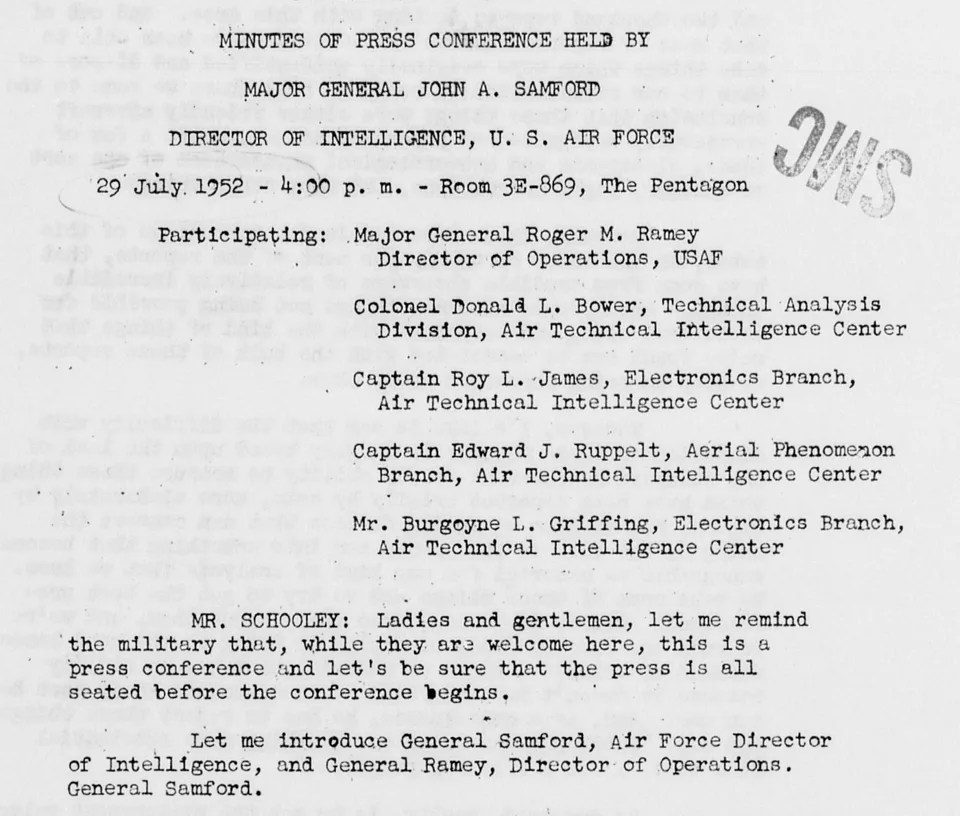
On two July nights in 1952, unidentified targets filled the radar scopes at Washington National Airport and Andrews Air Force Base, and jet interceptors were sent up. The Air Force's own files hold the officers' report, the analysts' verdict and the minutes of the press conference that followed. They are more cautious than the legend.
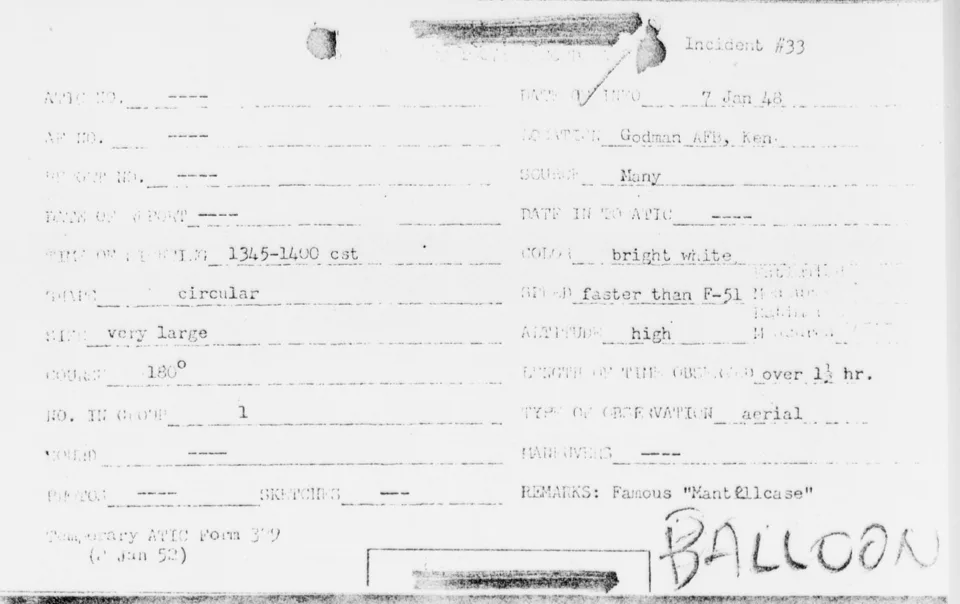
On 7 January 1948 a National Guard pilot chasing a bright object over Kentucky crashed and was killed. The US Air Force case file records what the control tower heard, why the first explanation was dropped, and the single word later written on the record card.
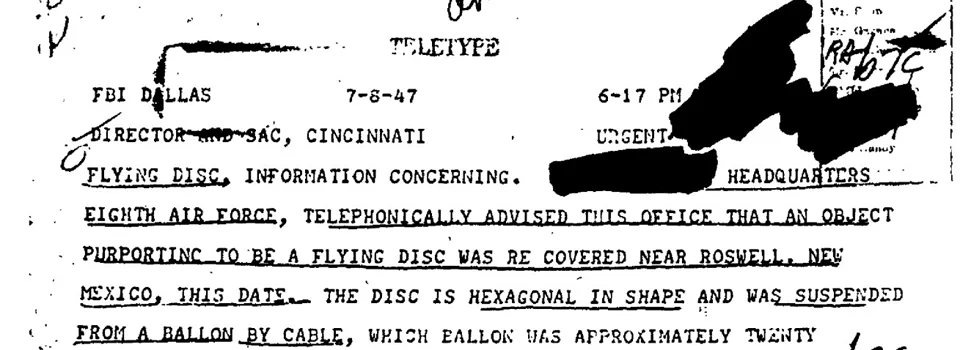
What crashed near Roswell in July 1947 is argued about to this day. The official paper trail is short: a one-page FBI teletype sent the same evening, two US Air Force reports from the 1990s, and a congressional audit that went looking for everything else.
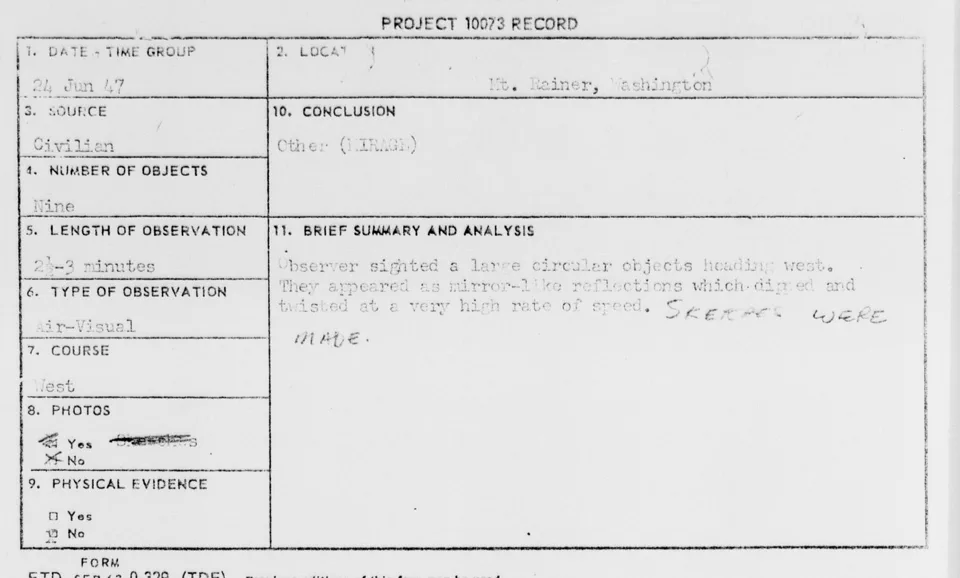
On 24 June 1947 a private pilot reported nine bright objects racing past Mount Rainier. The US Air Force file on his sighting, now at the US National Archives, keeps his typed statement, his sketch, and three different official verdicts.
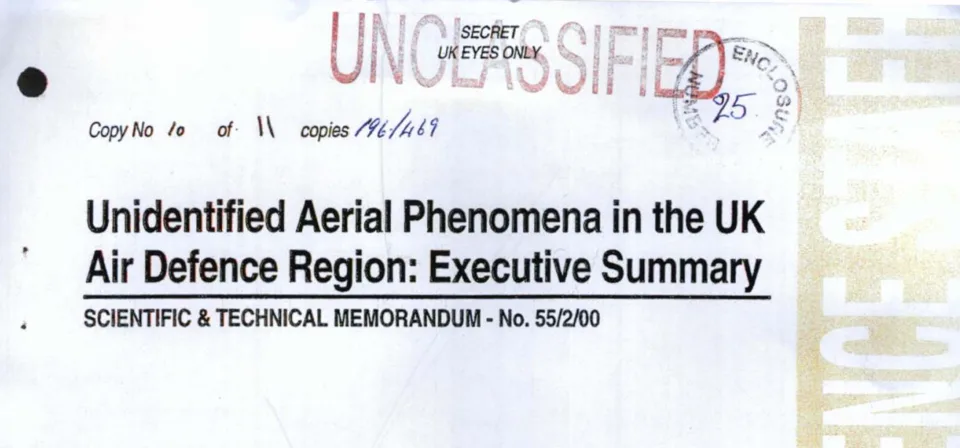
In 2006 a Freedom of Information request brought out a report by British Defence Intelligence, completed in 2000 and originally marked SECRET. Its famous first line is quoted everywhere — its conclusions far less often.
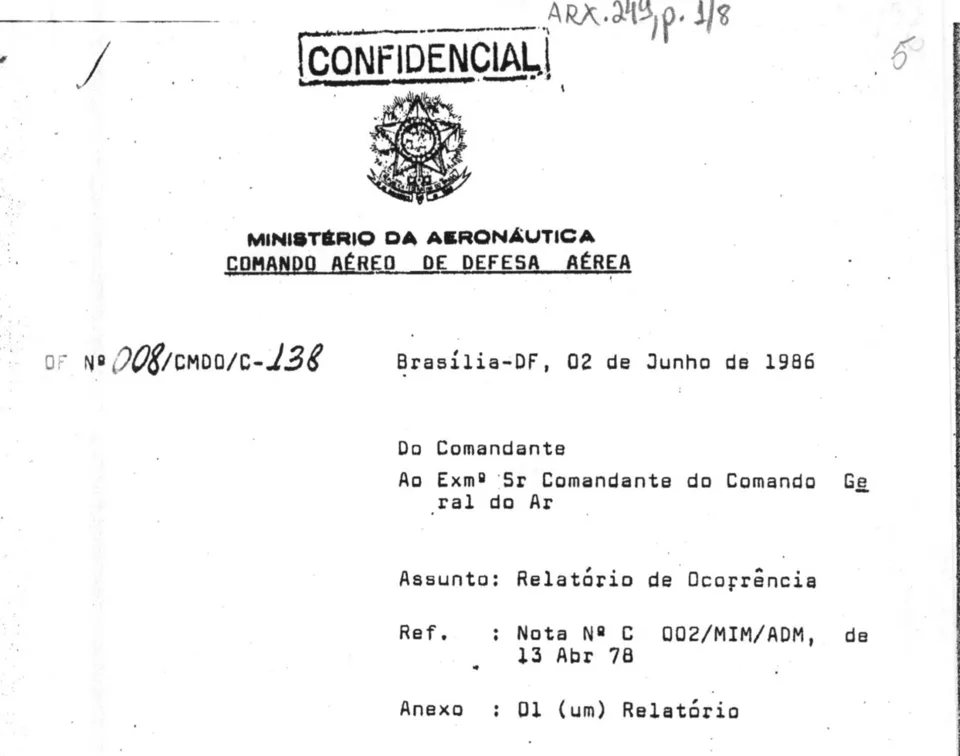
On the night of 19 May 1986, lights and radar contacts over south-east Brazil led the Air Force to send up five interceptors. Two weeks later the air defence command wrote an eight-page report for the Minister. It is now public at Brazil's National Archives — with a conclusion rarely found in a military document.
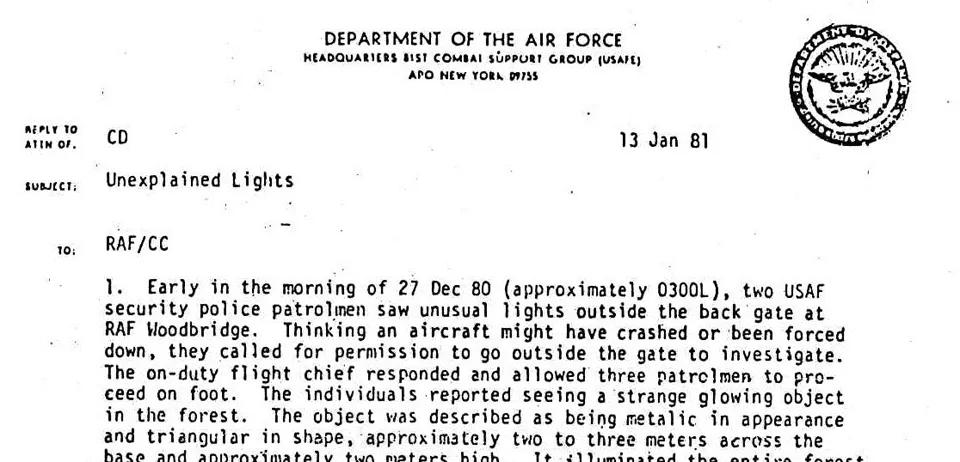
A single typed page, signed by the deputy commander of a US Air Force base in England, describes strange lights in a Suffolk forest over two nights in December 1980. It is the only official record of the event held by the UK National Archives. Read it line by line.
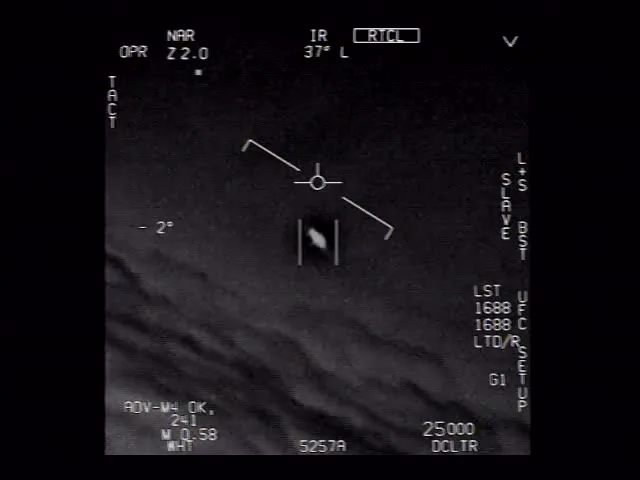
On 27 April 2020 the US Department of Defense officially published three short infrared videos filmed by Navy pilots in 2004 and 2015. Watch the original files here, with the exact words the Pentagon used — and the later NASA analysis of one of them.
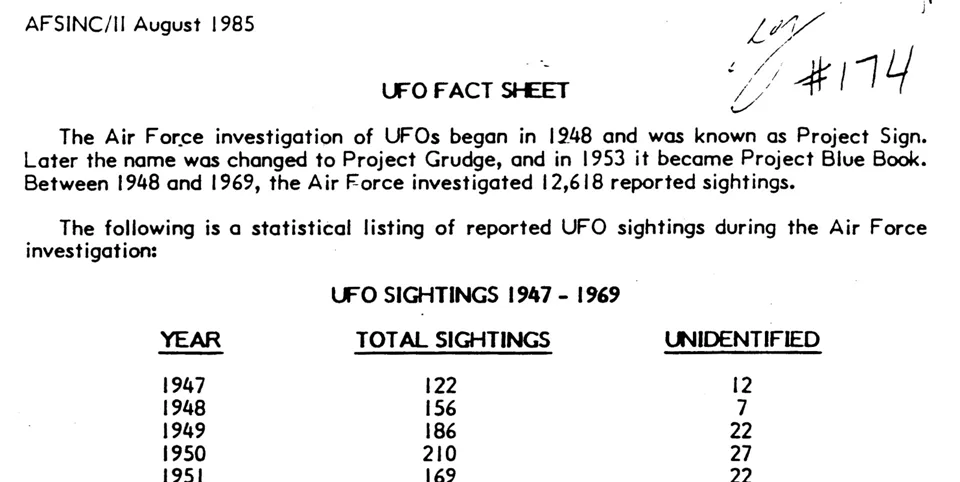
For twenty-two years the US Air Force collected and investigated UFO reports. When it closed the project in December 1969 it left three conclusions and a number that is still quoted today. The official fact sheet, the year-by-year table and a Pentagon film from 1952.
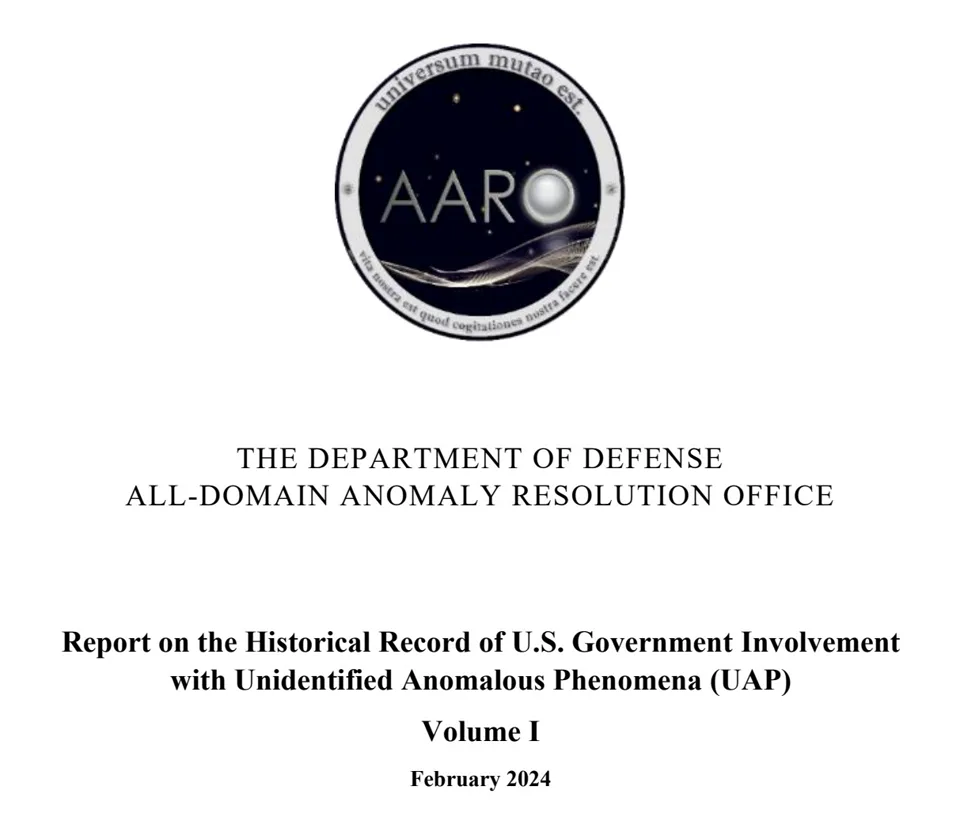
Ordered by Congress, the Defense Department's anomaly office went through nearly eighty years of US government UFO work and interviewed some thirty people who claimed inside knowledge. Sixty-three pages, and a blunt conclusion on “reverse-engineering” claims.
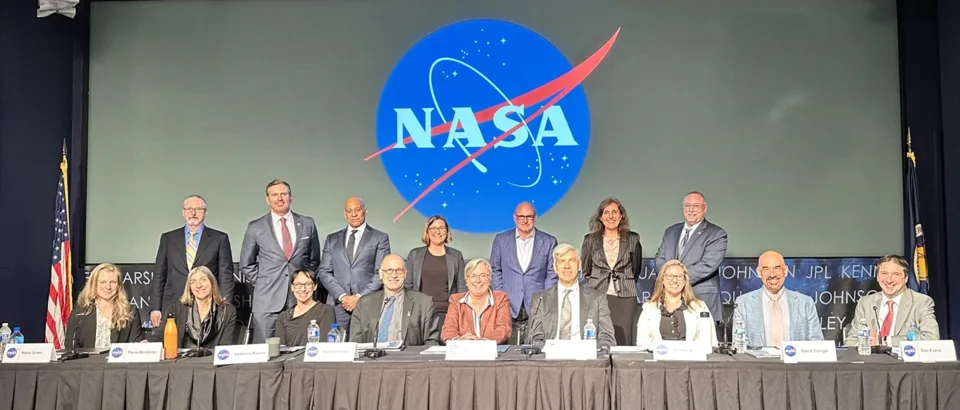
Sixteen outside experts, one public meeting, 36 pages. NASA did not ask its panel what UAP are, but how science should study them. The report's answer: better data first, conclusions later — and no reason, so far, to point beyond Earth.
Nine unclassified pages from the Office of the Director of National Intelligence: the first public assessment of “unidentified aerial phenomena” by the US intelligence community. The key numbers, the five possible explanations, and the sentences that are most often misquoted.
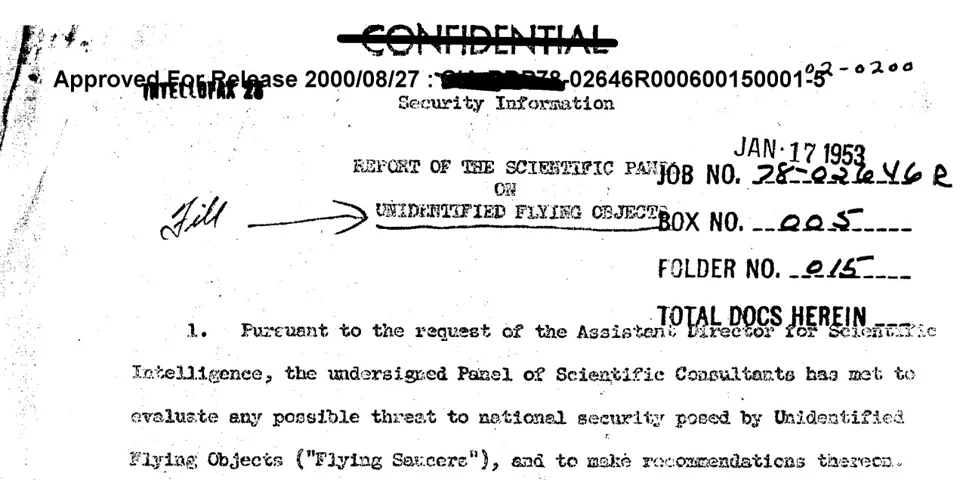
In January 1953 the CIA gathered a small group of leading physicists to answer one question: are UFOs a threat to national security? Their two-page report, once CONFIDENTIAL, shaped US policy for years. The surprise is where they saw the danger.
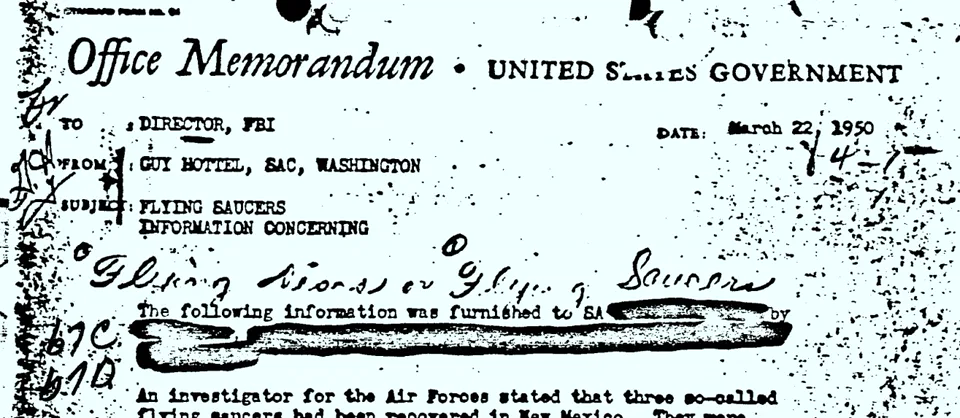
One page, three “flying saucers”, nine small bodies in metallic cloth. It is the most viewed document in the FBI's online reading room, and the Bureau itself explains why it proves far less than its fame suggests.
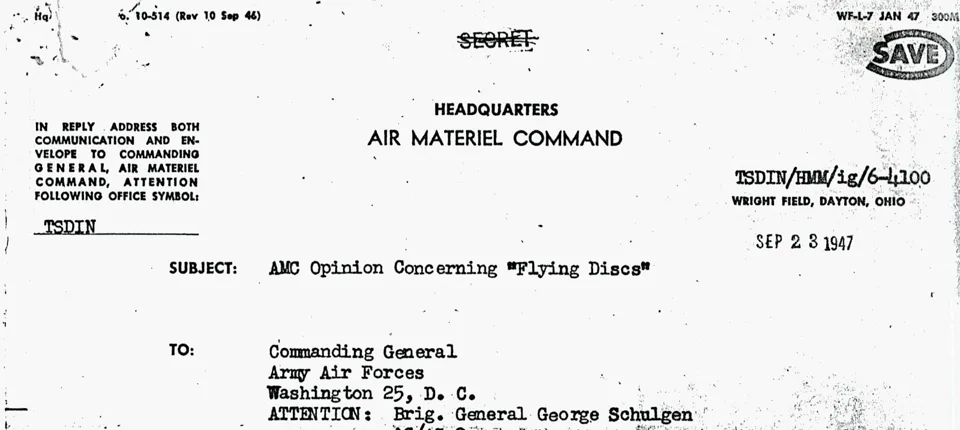
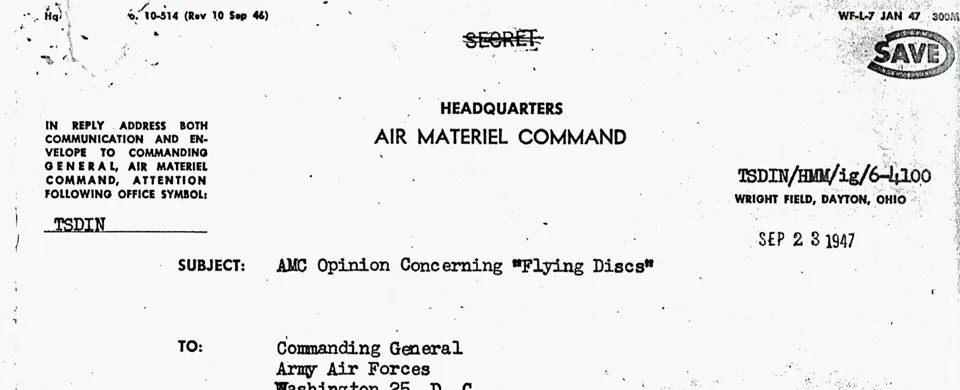
Three months after the first “flying saucer” wave, the head of the US Air Materiel Command put his command's opinion in writing. The three-page SECRET letter is now public at the US National Archives. Here is what it says, and what it does not.
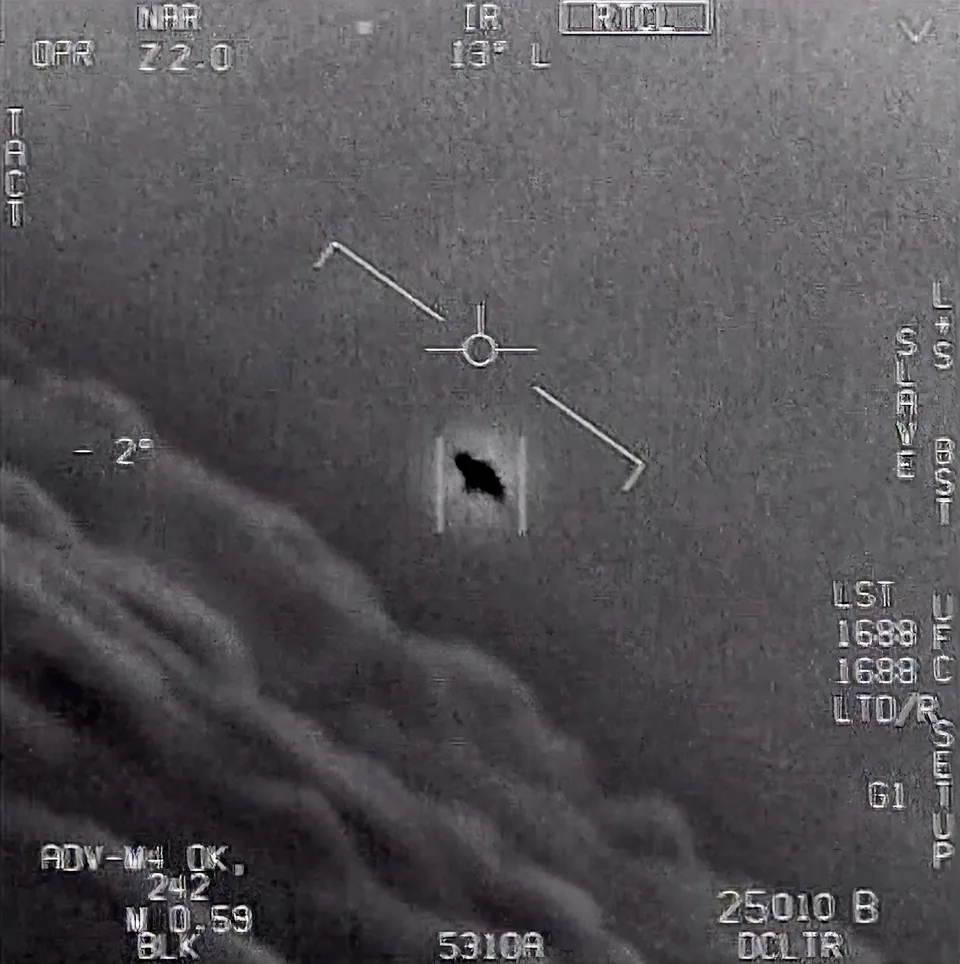
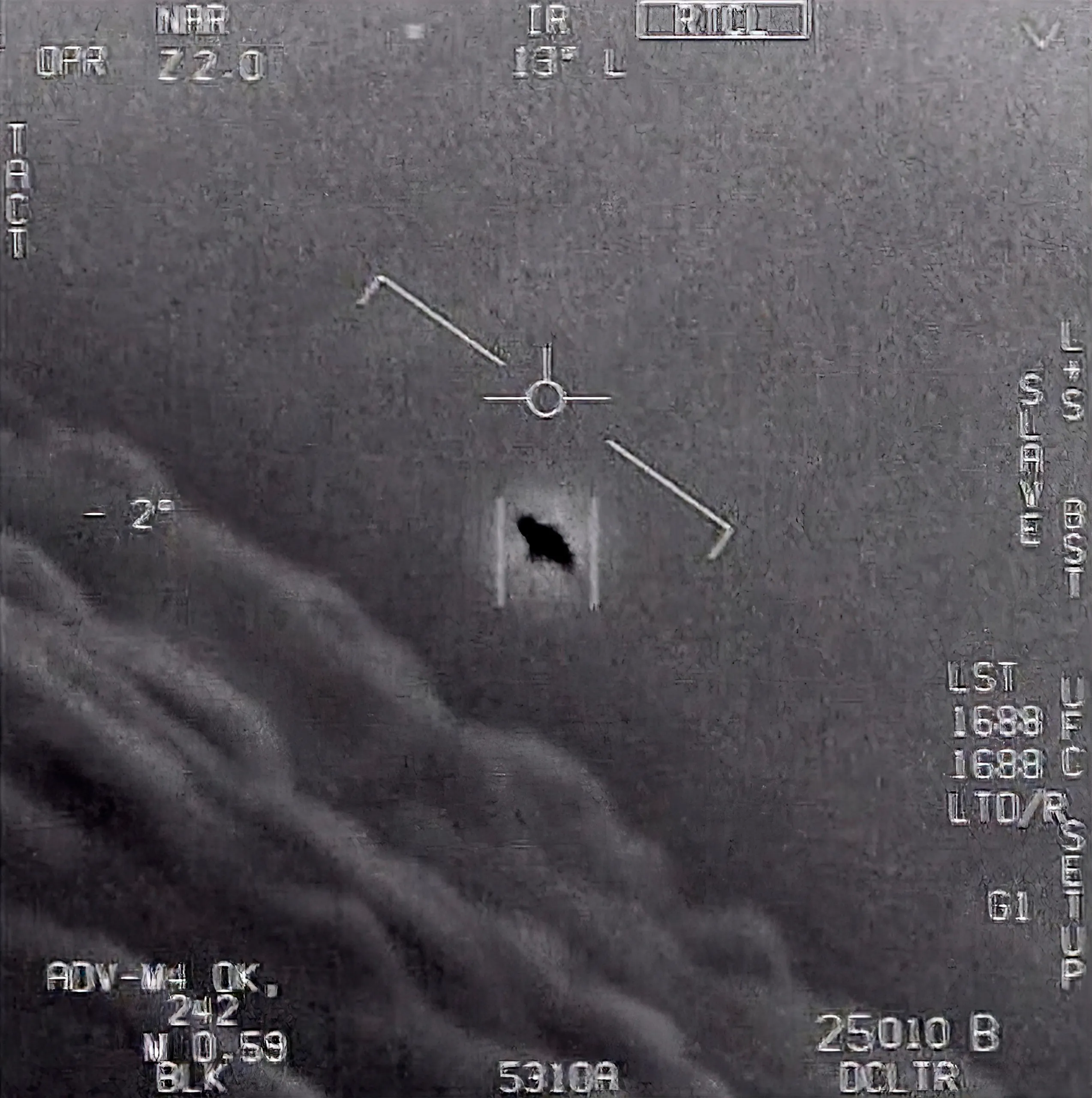
In 2015, a U.S. Navy fighter jet recorded a mysterious object using an infrared camera.
The footage, known as **GIMBAL**, was officially released by the Pentagon in April 2020.
The recording is authentic. But the nature of the object remains debated.
Was it an aircraft, an optical effect, or something else?
**A genuine UFO recording doesn't mean proof of aliens.** It means there's something worth investigating.
I've watched this footage seve
 U.F.O.@ufo