
The Black Seadevil: A Living Light in the Darkness
The ocean’s most haunting lure is completely real.

In the deep ocean, an unexpected light can mean danger. The black seadevil is a deep-sea anglerfish with an illuminated lure suspended above its mouth. In an environment where sunlight is scarce, such a signal may attract prey close enough to swallow.
The black seadevil’s broad mouth and pointed teeth make it look monstrous in close-up, but these features are adaptations to a world where meals can be rare. Marine researchers often know strange species from preserved specimens long before they encounter one alive.
In November 2014, MBARI’s remotely operated vehicle Doc Ricketts filmed a black seadevil in Monterey Canyon at roughly 580 metres. The footage was exceptional because it documented the animal swimming in its natural habitat rather than lying on a laboratory table.
Anglerfish also show remarkable diversity in reproduction and body size across species. The famous parasitic-male story applies to particular deep-sea anglerfish lineages, not to every individual fish or every anglerfish species.
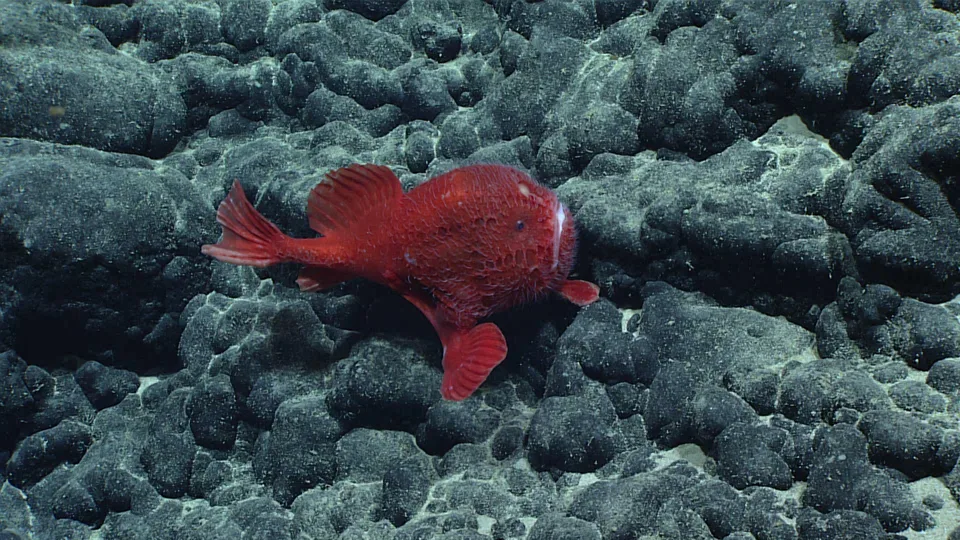
Watch the real footage and notice the animal’s deliberate movement. The deep sea rewards efficiency, not speed: waiting with the right lure may be more effective than chasing prey through darkness.
Watch the real footage
Sources
- Scientific source: MBARI: Melanocetus johnsonii
- Further reading: MBARI
Cover: original title card, not a photograph. Photographs and uploaded video: NOAA Ocean Exploration and partner expeditions, public domain, credited in each caption. Embedded videos stay on their owners' YouTube channels. No AI-generated animals are used in this series.
Comments (0)
Log in to comment