

The Tripod Fish That Stands on the Ocean Floor
Why moving less can mean surviving longer.
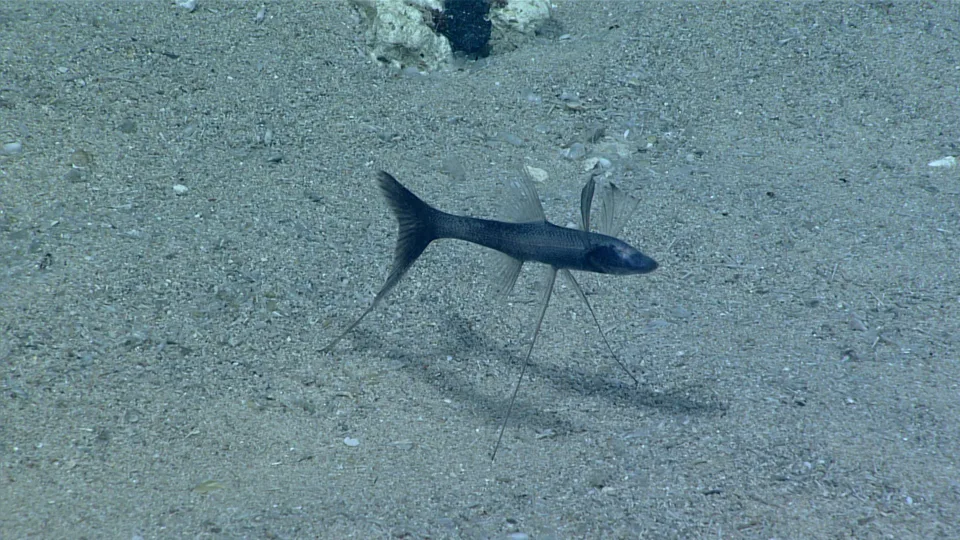
Standing still can be an effective hunting strategy in the deep sea. Tripod fishes of the genus Bathypterois use elongated fin rays to lift their bodies above the seafloor, creating a silhouette that resembles a three-legged underwater tripod.
The posture allows the fish to wait above the sediment rather than constantly swimming in search of a meal. In the deep ocean, currents may carry small prey toward a patient predator, conserving precious energy.
NOAA Ocean Exploration documented a tripod fish standing on its modified fins at a depth of approximately 1,200 metres during a 2021 expedition. The photographic and expedition material provides an unusually clear demonstration of an adaptation that sounds invented until you see it.
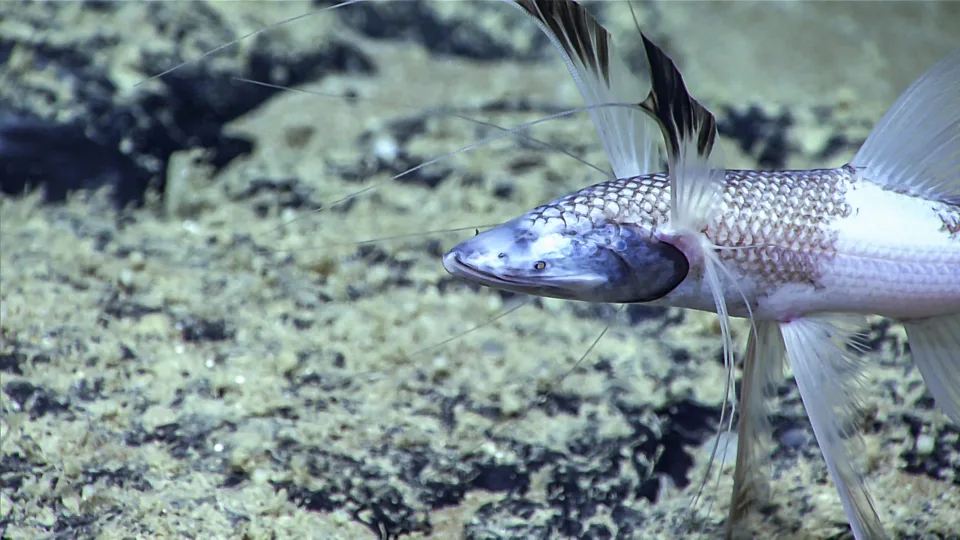
Its extended fin rays are not walking legs. The fish remains a fish, using highly modified anatomy to position itself in its environment. This distinction matters when sensational descriptions turn an elegant evolutionary adaptation into a fictional hybrid animal.
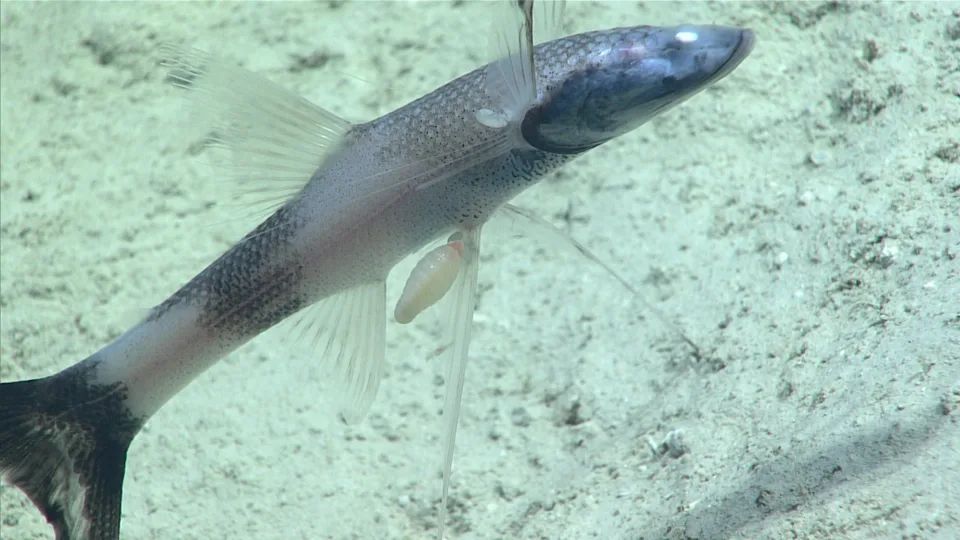
Look at the NOAA images and imagine the pressure, temperature and darkness at that depth. The fish’s pose is an answer to those conditions: survival sometimes means being perfectly still, in exactly the right place.
Sources
- Scientific source: NOAA Ocean Exploration: Bathypterois spp.
- Further reading: NOAA Ocean Exploration
- Cover photo: A tripod fish (Bathypterois sp.) standing on its modified fins at about 1,200 metres, Windows to the Deep 2021, Dive 08. Credit: NOAA Ocean Exploration, Windows to the Deep 2021 (public domain).
Photographs and uploaded video: NOAA Ocean Exploration and partner expeditions, public domain, credited in each caption. No AI-generated animals are used in this series.
Comments (0)
Log in to comment