
1950 — The FBI's most-read file: the Guy Hottel memo
One page, three “flying saucers”, nine small bodies in metallic cloth. It is the most viewed document in the FBI's online reading room, and the Bureau itself explains why it proves far less than its fame suggests.
At a glance
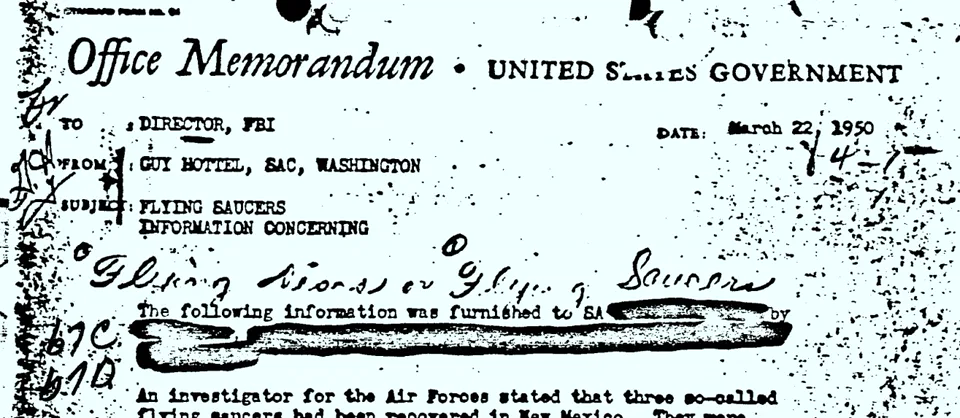
- Document: FBI office memorandum, subject “Flying Saucers — Information Concerning”
- From: Guy Hottel, Special Agent in Charge, Washington Field Office
- To: the Director of the FBI
- Date: 22 March 1950
- Length: one page
- Where it is today: The Vault, the FBI's public reading room
What the page says
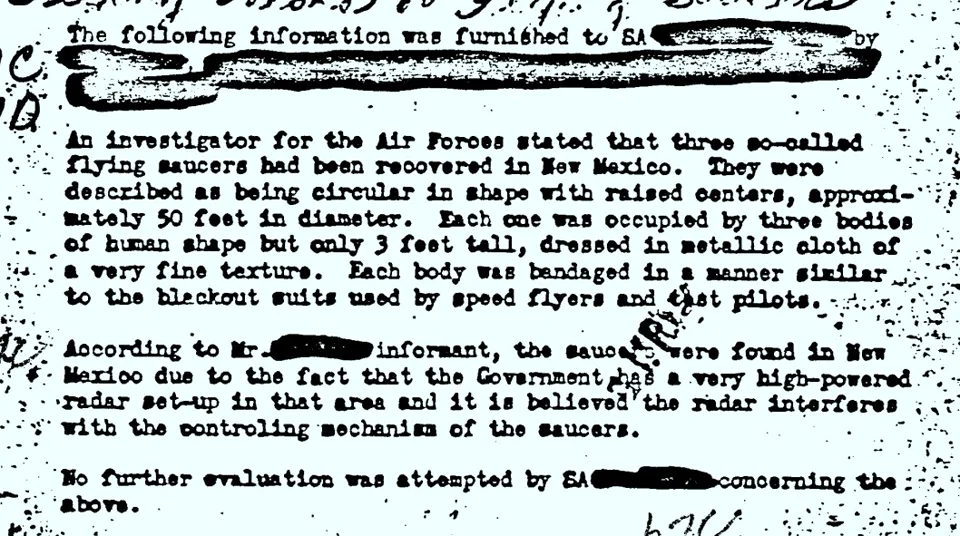
The memo passes on a story. Someone — the name is blacked out — told an FBI agent what an Air Force investigator had allegedly said:
- three “flying saucers” had been recovered in New Mexico;
- they were circular, with raised centres, about 50 feet across;
- each carried three bodies “of human shape but only 3 feet tall”, dressed in fine metallic cloth;
- they had come down because a powerful government radar in the area interfered with their controls.
The line that matters most
The memo ends with a sentence that is easy to miss:
“No further evaluation was attempted by SA [name redacted] concerning the above.”
In other words: the agent wrote the story down and went no further. Nothing was checked.
What the FBI says about it
In 2013, after the memo had passed almost a million views, the Bureau published its own explanation. Its points:
- The memo is a second- or third-hand claim that the FBI never investigated.
- It was not secret news: it was first released in the late 1970s and had been on the FBI website for years before The Vault opened in 2011.
- It is dated nearly three years after Roswell, and the FBI sees no reason to connect the two.
- For a few years the FBI did check sightings at the Air Force's request. That practice ended in July 1950, four months after this memo.
“…it is simply a second- or third-hand claim that we never investigated.” — FBI, 2013
What it does not say
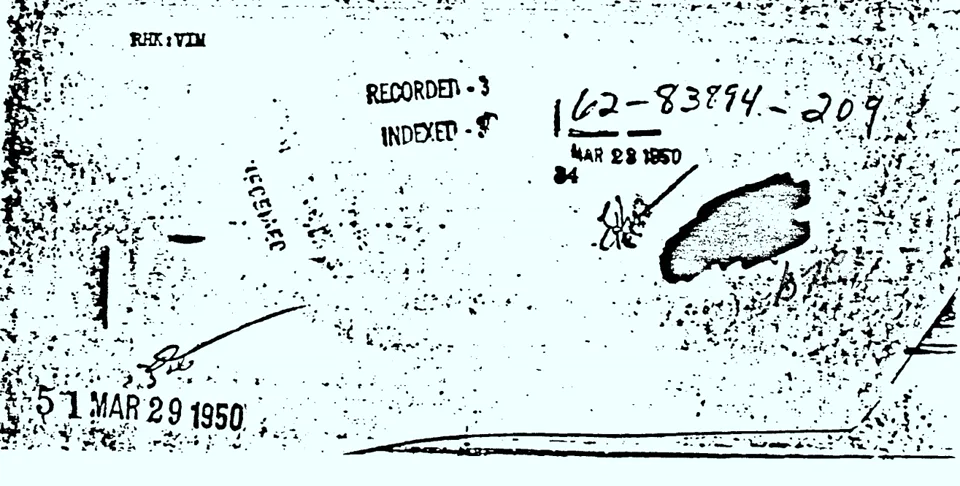
- It is not an FBI finding. The Bureau reports what someone said someone else said.
- It is not about Roswell. It names only “New Mexico” and comes from 1950.
- It was not “declassified in 2011”. It had been public for more than thirty years.
- Some believe it repeats a hoax that was circulating at the time. The FBI's answer is careful: its files hold nothing that could confirm that theory either.
Why it matters
It is a perfect lesson in reading official files. A document can be completely authentic — real letterhead, real stamps, real archive — and still record nothing more than a rumour. The source of a page tells you who wrote it down, not whether the story is true.
Sources
FBI, The Vault, file “Guy Hottel”, Part 1 of 1. FBI, “UFOs and the Guy Hottel Memo”, 25 March 2013. US government work, public domain.
Comments (0)
Log in to comment