1953 — The Robertson Panel: the CIA asks scientists to judge the saucers
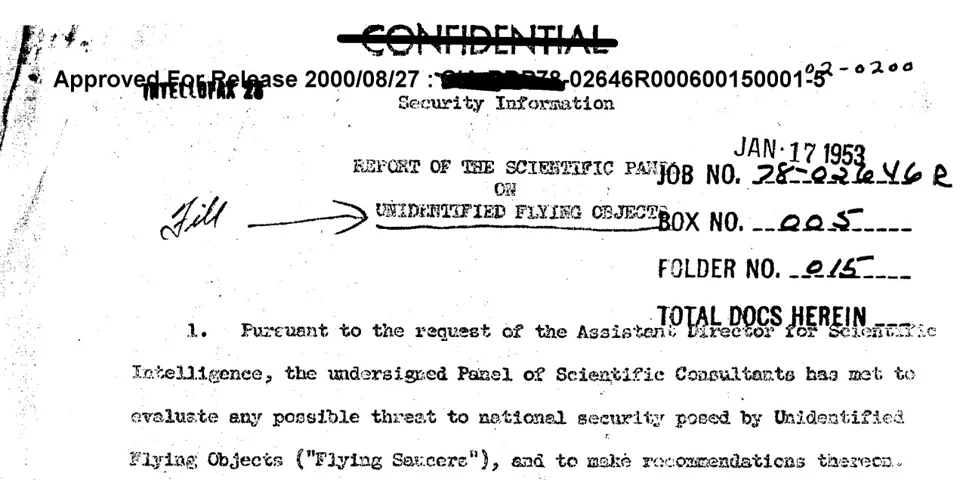
In January 1953 the CIA gathered a small group of leading physicists to answer one question: are UFOs a threat to national security? Their two-page report, once CONFIDENTIAL, shaped US policy for years. The surprise is where they saw the danger.
At a glance
- Document: “Report of the Scientific Panel on Unidentified Flying Objects”
- Convened by: CIA, Office of Scientific Intelligence
- Date: 17 January 1953
- Length: 2 pages, originally CONFIDENTIAL
- Released: approved for release by the CIA; public in the CIA Reading Room (document CIA-RDP78-02646R000600150001-5)
The background
1952 had been the busiest year on record for sightings: the Air Force logged more than 1,500 reports, and in July radar returns over Washington, D.C. made front pages. The CIA feared that a flood of reports could jam military communication channels at a critical moment of the Cold War.
It asked a panel chaired by the Caltech physicist H. P. Robertson to review the Air Force's best cases. According to the CIA's own published history, the other members were Samuel Goudsmit, Luis Alvarez, Thornton Page and Lloyd Berkner.
Conclusion one: no direct threat
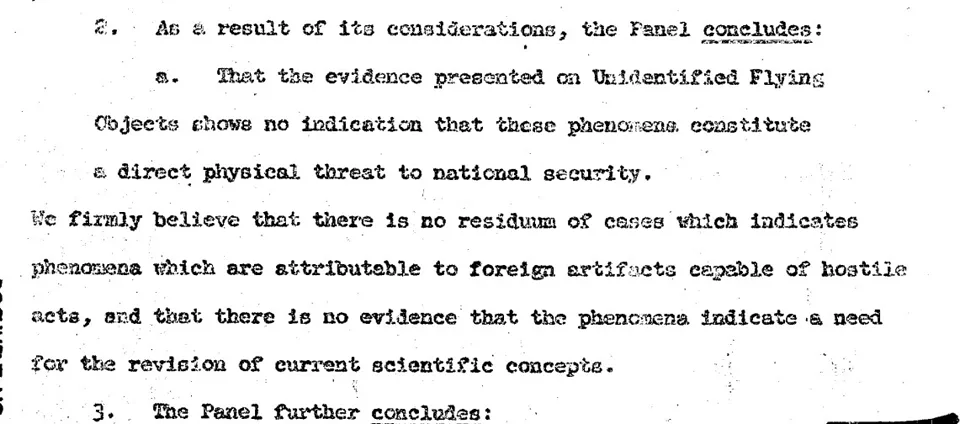
The panel reviewed “a selection of the best documented incidents” supplied mainly by the Air Technical Intelligence Center. Its verdict:
“…the evidence presented on Unidentified Flying Objects shows no indication that these phenomena constitute a direct physical threat to national security.”
It added that nothing pointed to foreign devices capable of hostile acts, and nothing required a revision of current scientific concepts.
Conclusion two: the reports are the risk
Here the report turns. The danger, it says, lies not in the objects but in the attention given to them:
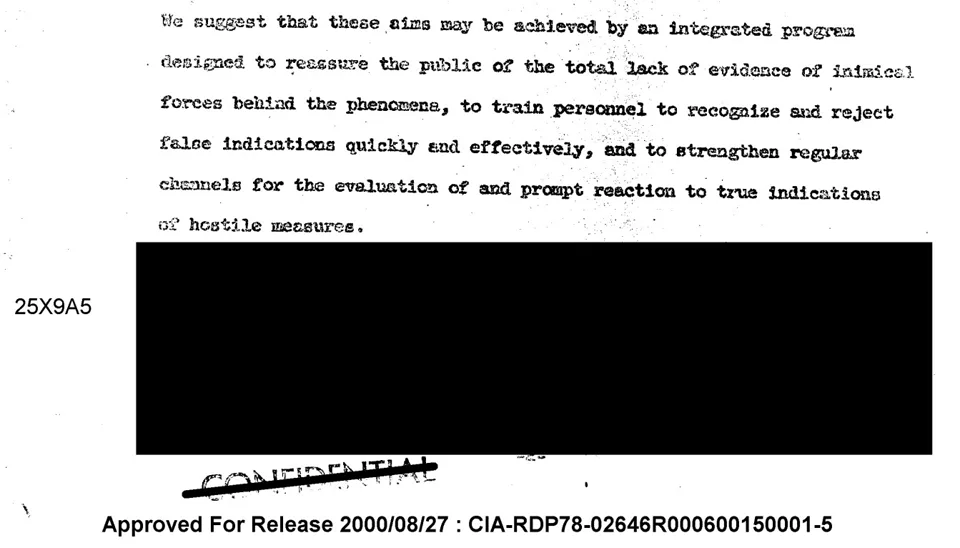
- irrelevant reports clogging channels of communication;
- repeated false alarms leading people to ignore real signs of hostile action;
- a “morbid national psychology” that hostile propaganda could exploit.
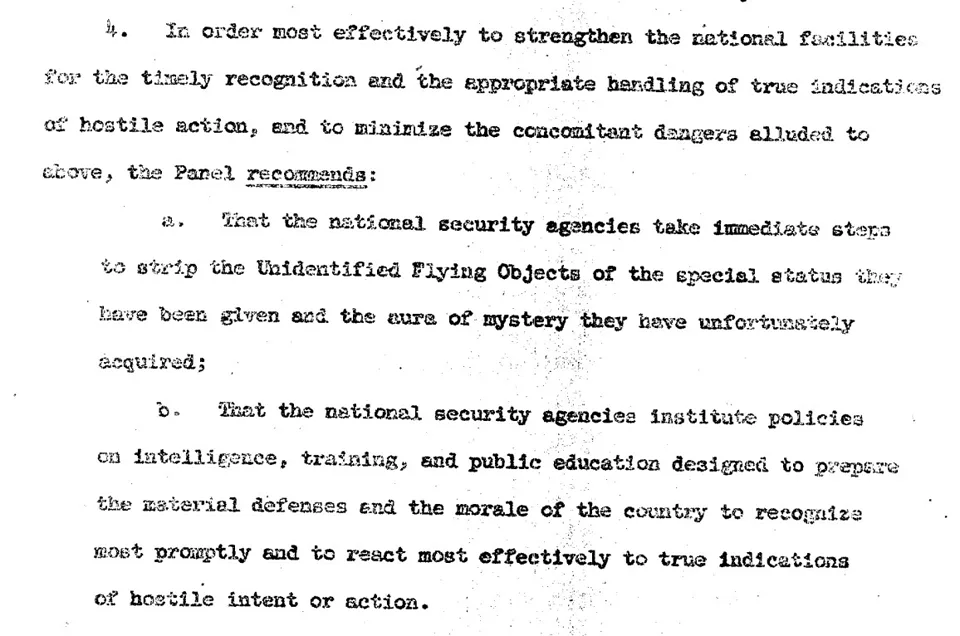
What it recommended
“…strip the Unidentified Flying Objects of the special status they have been given and the aura of mystery they have unfortunately acquired.”
The panel asked for policies on intelligence, training and public education: reassure the public, and train personnel to recognise and reject false alarms quickly.
The companion memo
A longer CIA memorandum on the same meetings, also released, records the discussion in more detail. It describes the proposed education programme as having two aims, “training and ‘debunking’”, suggests using films and television, and notes that civilian saucer groups should be watched because of their influence on public opinion.
Those details come from that memorandum, which calls itself an unofficial supplement — not from the two-page report signed by the scientists.
What it does not say
- It does not claim every case was explained.
- It gives no verdict on extraterrestrial origin in those words: it speaks of threat, foreign devices and scientific concepts.
- The name “Robertson Panel” is a later nickname; the document speaks only of a panel of scientific consultants.
Why it matters
The CIA kept its sponsorship of the panel quiet for years. Its own historian later wrote that this secrecy caused the Agency lasting credibility problems — a reminder that hiding a dull truth can feed suspicion more than the truth itself.
Sources
CIA Reading Room, documents CIA-RDP78-02646R000600150001-5 (panel report) and CIA-RDP81R00560R000100030027-0 (memorandum on the meetings). Gerald K. Haines, “CIA's Role in the Study of UFOs, 1947–90”, CIA Studies in Intelligence. US government works, public domain.
Comments (0)
Log in to comment