

2000 — Britain's secret UAP study: “That UAP exist is indisputable”
In 2006 a Freedom of Information request brought out a report by British Defence Intelligence, completed in 2000 and originally marked SECRET. Its famous first line is quoted everywhere — its conclusions far less often.
At a glance
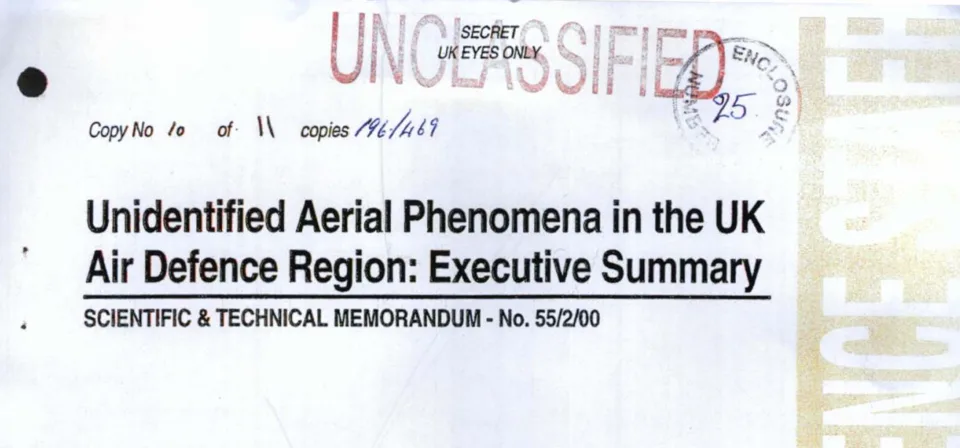
- Document: “Unidentified Aerial Phenomena in the UK Air Defence Region”, Scientific & Technical Memorandum No. 55/2/00 — widely known as the “Condign” report
- Issued by: UK Ministry of Defence, Defence Intelligence Staff (branch DI55)
- Date: December 2000
- Original marking: SECRET — UK EYES ONLY; only 11 copies
- Released: May 2006, after a Freedom of Information request, with some passages removed
- Length: an executive summary and three volumes
The famous sentence, in context
The introduction contains the line that travels on its own:
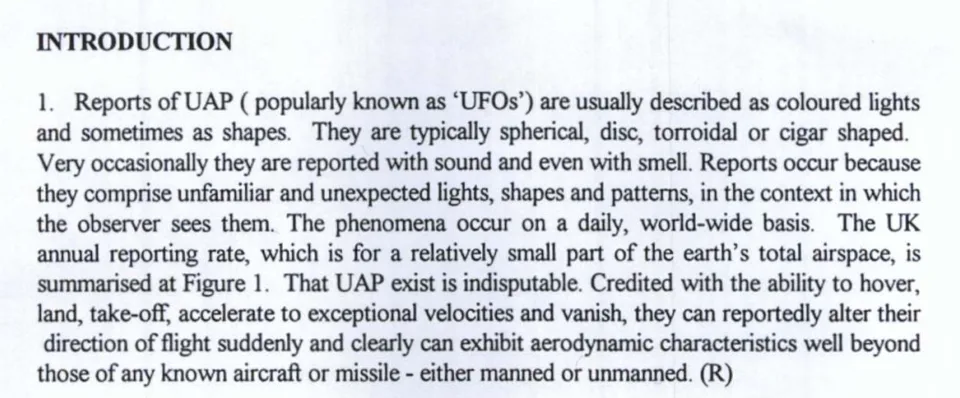
“That UAP exist is indisputable.”
Read with the lines around it, the meaning is narrower than it sounds: people do report unfamiliar lights and shapes, every day, all over the world. The question the study asks is what causes those reports.
What the study was for
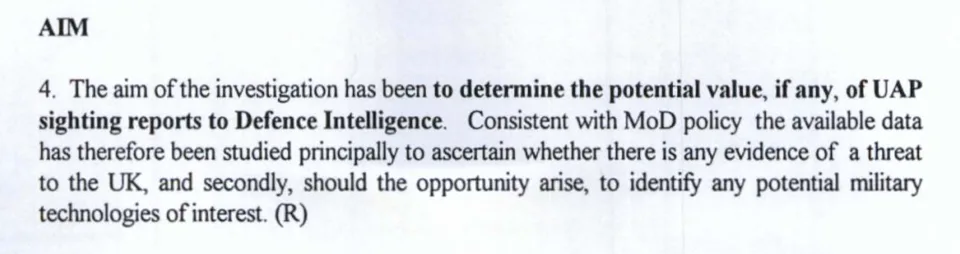
Not to solve the mystery for its own sake. The aim was to decide whether some thirty years of sighting reports were of any use to Defence Intelligence: first, was there a threat to the United Kingdom; second, was there any technology worth knowing about.
What it found
- Reports come from misidentified man-made objects, from ordinary natural phenomena, and from natural phenomena that are relatively rare.
- The cases still unexplained are attributed to rarely seen natural events in the atmosphere — the report points in particular to plasmas, charged masses of gas.
- No sign of hostility or of control:
“No evidence exists to suggest that the phenomena seen are hostile or under any type of control, other than that of natural physical forces.”
No objects, no artefacts
One short passage answers a question often asked:
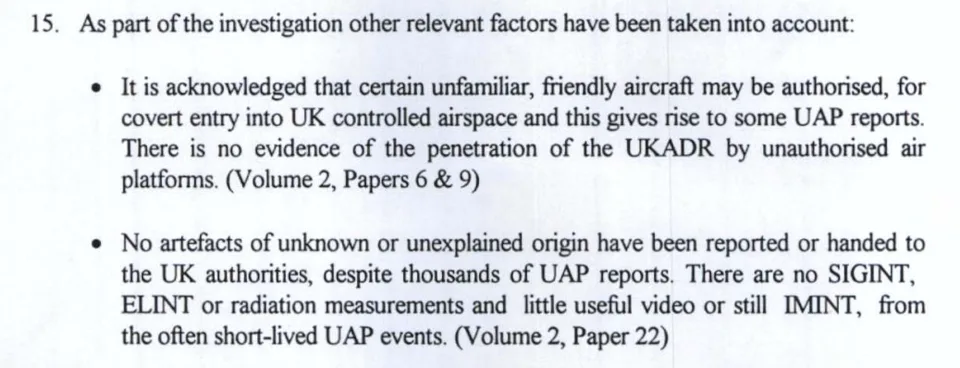
“No artefacts of unknown or unexplained origin have been reported or handed to the UK authorities, despite thousands of UAP reports.”
The same page admits that certain unfamiliar friendly aircraft may be authorised to enter UK airspace covertly — and that this, too, produces some reports.
The recommendation: stop
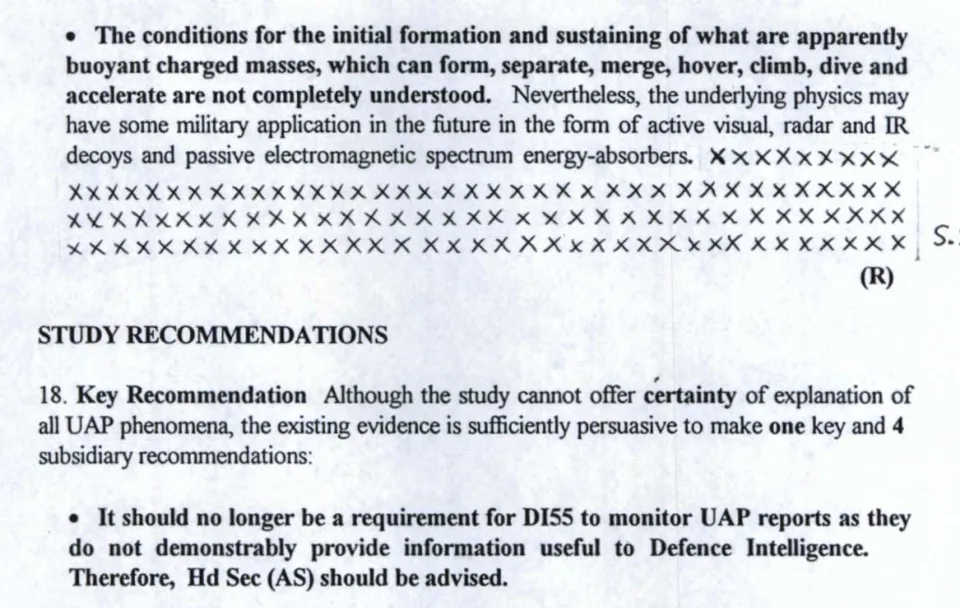
The key recommendation is unusual for an intelligence study — it proposes ending its own subject:
“It should no longer be a requirement for DI55 to monitor UAP reports as they do not demonstrably provide information useful to Defence Intelligence.”
The database was not to be maintained. Flight-safety findings were to be passed to the Royal Air Force and civil aviation.
Advice to pilots
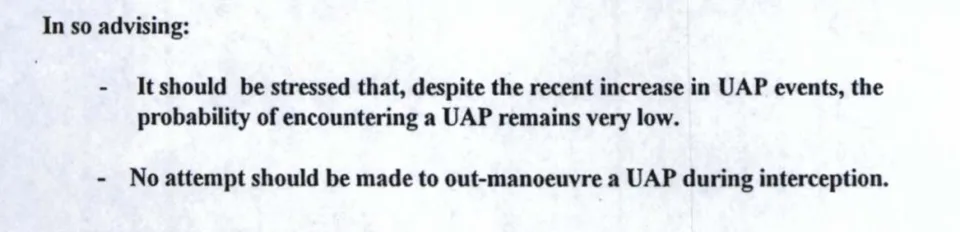
The summary ends with two practical lines for aircrew: the chance of meeting a UAP is very low — and if it happens, do not try to out-fly it.
What it does not say
- It does not say that craft exist. It finds no evidence that anything seen in UK airspace was an incursion of “any intelligent (extra-terrestrial or foreign) origin”.
- It does not claim certainty. The authors write that the study “cannot offer certainty of explanation of all UAP phenomena”.
- Its plasma hypothesis is a hypothesis, built on files and published science, not on new measurements.
- The name “Condign” does not appear on the cover of the summary; it is the name by which the study became known.
Why it matters
It is the most detailed study of the subject a British government body is known to have produced, and its advice was blunt: Defence Intelligence should stop monitoring UAP reports. In 2009 the Ministry of Defence closed its public UFO desk; its UFO files have been transferred to The National Archives.
Sources
UK Ministry of Defence, “Unidentified Aerial Phenomena in the UK Air Defence Region: Executive Summary”, December 2000, published under the MoD Freedom of Information Publication Scheme, 15 May 2006. The National Archives (UK), research guide “UFOs”. Document images © Crown copyright.
Comments (0)
Log in to comment