

2023 — NASA's independent study: UAP as a problem of data
Sixteen outside experts, one public meeting, 36 pages. NASA did not ask its panel what UAP are, but how science should study them. The report's answer: better data first, conclusions later — and no reason, so far, to point beyond Earth.
At a glance
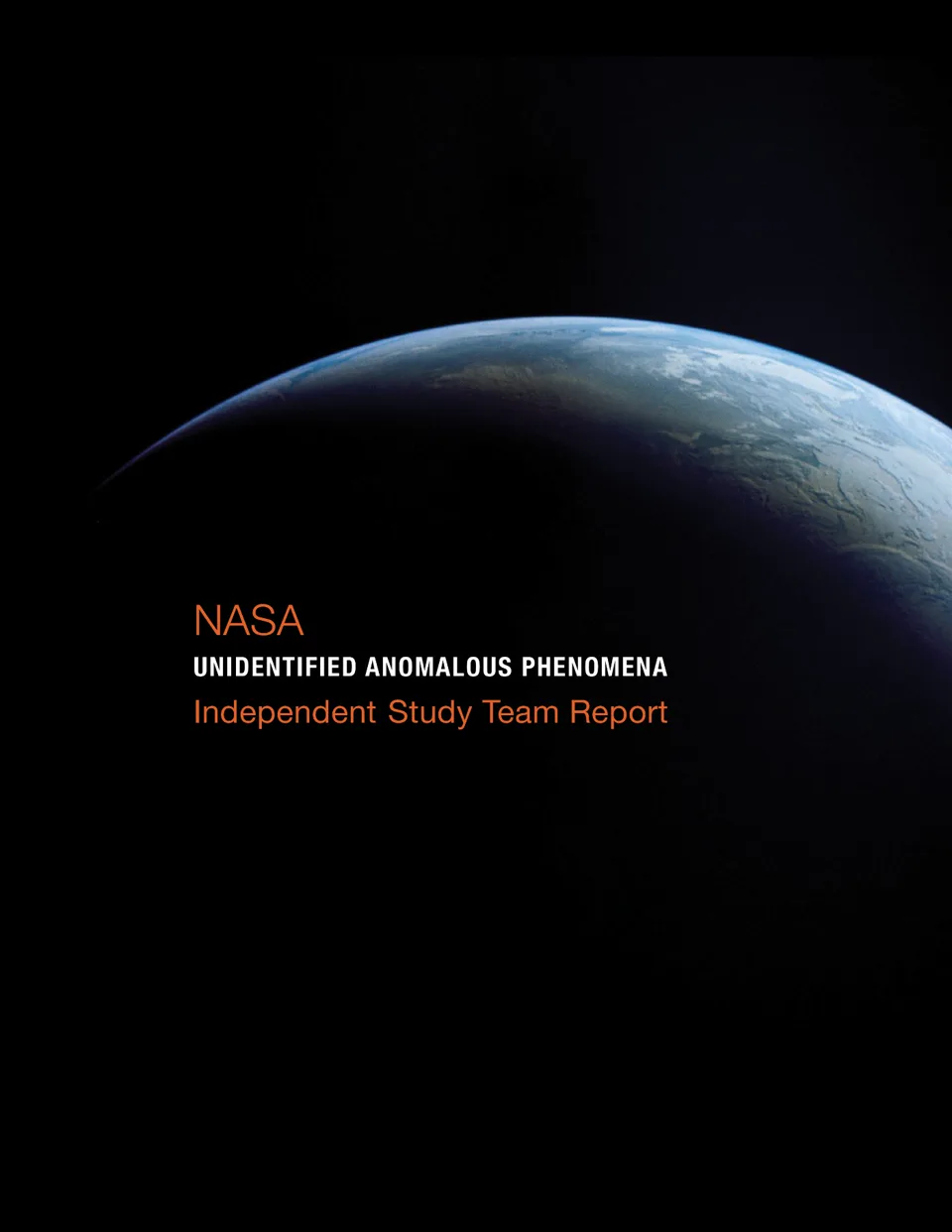
- Document: “NASA Unidentified Anomalous Phenomena Independent Study Team Report”
- Published: 14 September 2023
- Length: 36 pages
- Chair: astrophysicist David Spergel
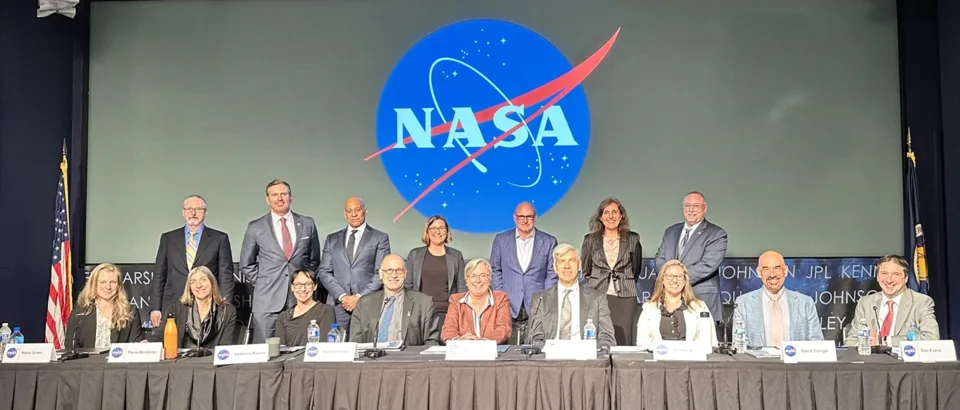
- Team: 16 experts from science, aviation, data analysis and space exploration, including former astronaut Scott Kelly
- Data used: unclassified only
What NASA asked
NASA set up the team in June 2022 with a narrow brief: draw a roadmap for how the agency's data and the tools of science could help to understand UAP. The report says so plainly:
“This is not a review of previous UAP incidents.”
A public meeting was held on 31 May 2023; the final report followed in September.

The main finding: the data are not good enough
Most UAP reports come from sensors built for other jobs, with no calibration and little supporting information. Eyewitness accounts cannot be checked on their own. Hence the central sentence:
“…we do not presently have the body of data needed to make definitive, scientific conclusions about UAP.”
What the panel recommends
- Use NASA's Earth-observing satellites and commercial remote sensing to describe the conditions around a sighting.
- Collect with several well-calibrated sensors at once.
- Apply artificial intelligence and machine learning — but only to carefully curated data.
- Explore crowdsourcing, for instance a smartphone app for reports.
- Make better use of the civil Aviation Safety Reporting System.
- Reduce the stigma that discourages pilots and scientists from reporting.
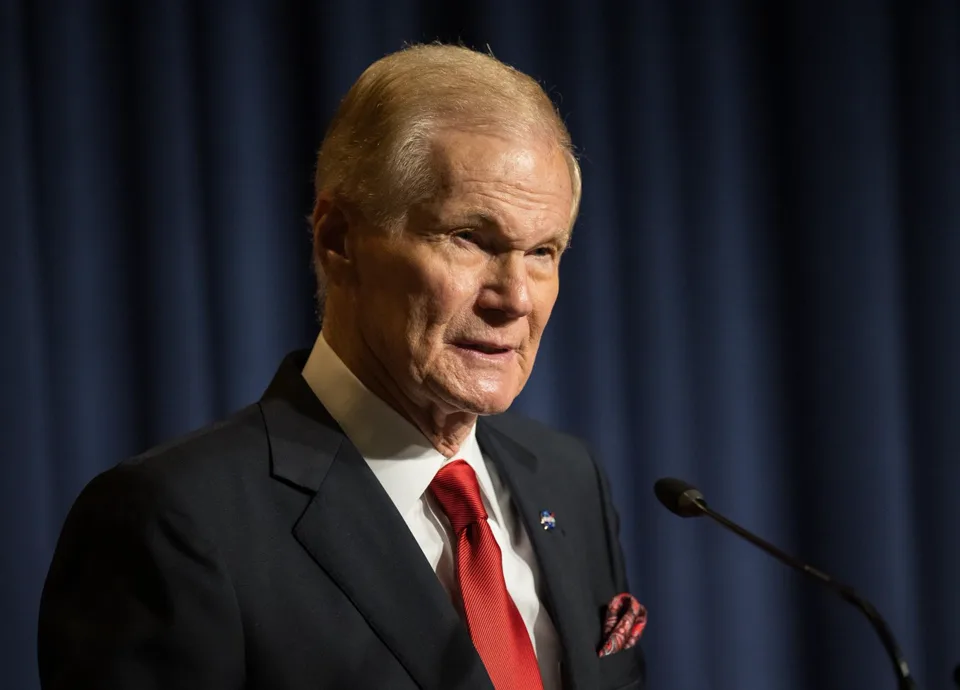
NASA announced that it was appointing a Director of UAP Research.
A worked example: the GOFAST video
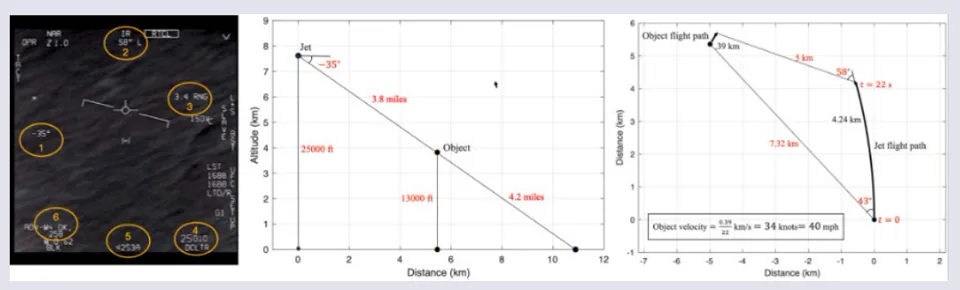
To show what careful analysis can do, the team took the Navy's GOFAST clip and used only the numbers on the display. The object turns out to be at about 13,000 feet, moving at roughly 40 mph — “most likely drifting with the wind”. The apparent speed is mostly the motion of the jet itself.
On extraterrestrial origin
“At this point there is no reason to conclude that existing UAP reports have an extraterrestrial source.”
The report does not exclude the idea as a matter of principle. It says the evidence does not support it, and that before reaching for it every ordinary explanation has to be ruled out first.
What it does not say
- It does not explain individual cases — GOFAST is only an illustration.
- It is not based on classified material.
- It is the advice of an outside panel, not an official NASA verdict on what UAP are.
- It makes no claim of concealment or hidden evidence.
Why it matters
It changes the question. Instead of “what are they?”, it asks “what would we need to measure in order to know?” — and says honestly that we are not there yet.
Source
NASA, “Unidentified Anomalous Phenomena Independent Study Team Report”, September 2023, science.nasa.gov/uap. NASA material, public domain.
Comments (0)
Log in to comment